28 June 2020

That word 'God'

In God

Do not be afraid.  

This is not the name used to coerce compliance to a set of rules, or used to open wallets for personal profit.  It is not the name behind which people doing bad things have hidden, or the name in which truly awful things have been done.  Some people have always tried to coerce compliance, to prey on the finances of others.  Some people have always sought to get away with doing bad things.  And history is full of people being truly awful.  There will always be people using anything that works to do these things; and we must not be blind to it no matter where or when it happens. ‘God’ didn’t make them do it, no matter how much our cultures and societies may have enabled it.  Those people need to answer for their crimes, and alongside that, other people need to recognise the abuses of systems and to change the systems.

God is not a name.

God is a no-name.

And I believe in God.

I believe in God the way I believe in Justice, in Truth, in Beauty, in Good.  When I say I believe in all these things I am not opening up a debate about their existence, as if I can point at them — or as if anyone would settle anything by pointing to a place where they were not.  I am not using the phrase to ward off responsibility for my words and actions, and I am not using it to give me an authority or power over others, though that can be done with any of those other things I believe in too.  When I say I believe in God I am sharing my experience of the world, and of something important to me about how I live in that world.  


When I say I believe in God I am witnessing to God’s insistence, not God’s existence (John Caputo, The Weakness of God).

Personally or in my community, I have never experienced God as a rare creature found only in particularly unusual habitats, of which tall tales are told and dubious sightings are shared in hushed tones.  My belief in God isn’t a scientific fact to be verified or falsified; it’s my witness to a lived experience of more.  The experience of an insistence that I try to be a better person, that I try to understand the world around me and my place in it better.  An insistence not limited to the will and wants of the people around me, not limited to my ease or preference, not limited to current success or bound by past failures.  An unlimited insistence that is neither without me nor within me (John Henry Newman, A Proof of God).  The experience of an insistence that there is something else just over the horizon, just behind that cloud, or around that bend.  The insistence that things go on, wherever I look.  This experience is subjective, in the sense I can’t ever separate myself from it; but it is objective in the sense that I do not choose it, it does not stem from me alone, and — more yet — it is at the core of everything I do or say. 


That which we call God is always more (Anselm of Canterbury, Monologion). Every time we alight on something and would call it God we are disappointed because it falls short (Plato, Phaedrus).  God is more: we experience God in the difference between how things are and how we feel they ought to be; between what we know and what we feel there is to know. 


God is more, which means for every title we give, for every description we use — however true, however just, however beautiful — there is always more, which it does not convey, than it conveys.  For every new insight that comparison reveals to us about God, it turns out that God is always more NOT like that, than God IS like that.  God is always more NOT as we imagine or intuit, than anything we fixate on God being. 


Not this.


Not this.


Not even this.

That very urge that makes you feel uncomfortable with the word ‘God’, that makes you want to shy away from using it, is your own witness to knowing that God is more than what ‘God’ is said to be.  I, too, do not assert an old man with a long beard on a cloud; I, too, do not assert an angry, joyless dictator.  I, too, can all too often see the human behind the curtain when ‘God the great and powerful’ is proclaimed, and am angry, and sad, at the abuse and the greed and the power-mad, wanton cruelty.  None of this will I call God.

God is the insistence that I cannot deny that these things are wrong, that we can do better, that things can be better, that there is always more.  God is not ‘this being the case because I want it to be’: God is more, and I believe in God.


16 June 2020

In the beginning was the experience of Truth — How to say “We believe….” as recognition of community


We Believe
Often we read or hear something and our first thought is “I wouldn’t say that” or “I’m not comfortable with that language”.  We pore over the words of hymns or dissect the latest sermon or blog, and all the while we draw lines and dig trenches.  Creedal Tests have been used for centuries to do the same — as if Truth were a sword to separate the Sheep from the Goats, or the wheat from the chaff. 
Pause. 
Breathe. 
Don’t ask yourself if you agree with me; just take a moment to see if you can hear what I’m saying.  No one requires you to do anything or take any stance for the moment; and when that time comes you can, and you will.  But this isn’t that time, not yet.
I believe Truth isn’t a sword: it’s that in which “we live and move and have our being” (Act 17:28, Cretica by Epimenides).  It’s not something to use to divide and hold apart; rather, it is the very thing that makes us one.  It isn’t something to use to conquer others; it is the very foundation that allows us to be free. 

EPIMENIDES OF CNOSSOS a semi-mythical 7th or 6th century BC
 
Greek seer and philosopher-poet.

When I say “I believe”, I am not telling you what you ought to think, or requiring you to confirm my view.  I am sharing with you something about how I experience the world, offering a glimpse into why I say and do the things I do.  I am speaking my Truth.  That is to say, I am voicing that Truth open to all, shared by all, lived in by all but as experienced by me in all my limitations, with all my back-story, and in the language I have learned throughout my life.  
Expanding that idea, it is a beautiful thing to be able to say: “We believe…”.  It is an acknowledgement of a shared experience, a shared language, and shared hopes.  It is never the fruit of a simple debate over concepts and words: it is, at heart, a recognition of community rather than a tool for forging it.  The words of a Creed can inspire the conversation, the prayer, and the actions that bring about the “We believe …” moment, but they themselves neither create it nor constitute it. 
The Apostolic Creed, one of the most widely used and oldest of the creedal statements in Christianity, has to be understood in the context of a shared community, a shared set of stories and rituals, a shared experience of life.  It was spoken believer to believer, and is deeply embedded in the ritual of Baptism — where the dialogue isn’t one of Gatekeeper to Supplicant but, rather, the excited back and forth between friends or new partners.  The “Do you..” and “I do ..” is not one of uncertainty but of already knowing the answer and delighting in hearing it out loud.  Think of the wedding ceremony where each partner is asked if they take the other: there is no uncertainty at this point, and yet the saying of it out loud is still so much more than formality: it is a joyful expression of their relationship to each other and the community around them. 


The excitement of retrieving the football - which will
 become a shared story, a shared experience of life

The Apostolic Creed is not the Creedal Test that has rightfully been recognised in terms of power dynamics and control.  It is not accompanied by the cudgel of “say this, think that, or else”.  It is the joyful celebration of a shared experience of the divine, in a community of shared stories, shared rituals, shared prayer, and shared hopes.  This Creed is a shape not arrived at by carving into, or by cutting away, according to a precise, planned view of the end result, but rather a shape grown organically according to the nature of the living material and the conditions over time it finds itself in.  It is a shape that shows its history in every twist and knot, but is always growing, never knowing what the future will bring for it — yet unafraid because growth is not deviation from a plan, it is not failure, it is the success of ongoing life and vitality.


knotted, gnarled, organic growth - this is an apple tree
 but it may as well be a creed from the 4th century CE

“We believe …” can be beautiful, it can be joyful, and I think — if we are honest with ourselves — it is something we all long for.  Though we may all fall into the pride of wanting to push our views and our expressions on others, and though we have all seen too clearly how easily Creedal Tests have been used to exert influence and put pressure on individuals and groups, our longing is not for the set of words.  The shared experience of the Divine, the communal life of shared stories and prayer, the excited back and forth of connecting with others at the profoundest level: that is what we thirst for.

We long to be one, not by giving up our personhood, not by rejecting the quality of individuality, not by capitulating to the will of others, but by embracing the community, by shared living in Truth.  I haven’t lost hope for that “We believe…” moment, that Creed ‘in spirit and in truth’ (John 4:23) and I believe the surest start towards it is acknowledging the culture and the stories that have shaped me and which I already share with others.  Despite the name that the tale is more commonly known by, there were two sons in the tale of the Forgiving Father (Luke 15: 11-32): together we can write an ending where no one is left sat outside.

13 May 2020

In the beginning was the doing and the doing became the Word - how to say "I believe" as part of conversation

“I believe…”
      I’m going to ask you to bear with me.  There are going to be times you want to jump in and point out things that are problematic, things you don’t agree with, things that need rounding off or balancing out.  Don’t do it.  I won’t take your silence for agreement and I ask you to not take any of mine for deliberate avoidance or ‘tacit denial’.  I’m going to advance a position today that suggests that what we say takes its meaning from the conversation we are having, and that that conversation is framed within the community, culture, and ‘way of life’ we find ourselves in.  This isn’t my idea, so I am not going to build it up from the foundations.  If you fancy checking it out in detail give Wittgenstein’s Philosophical Investigations a look. 
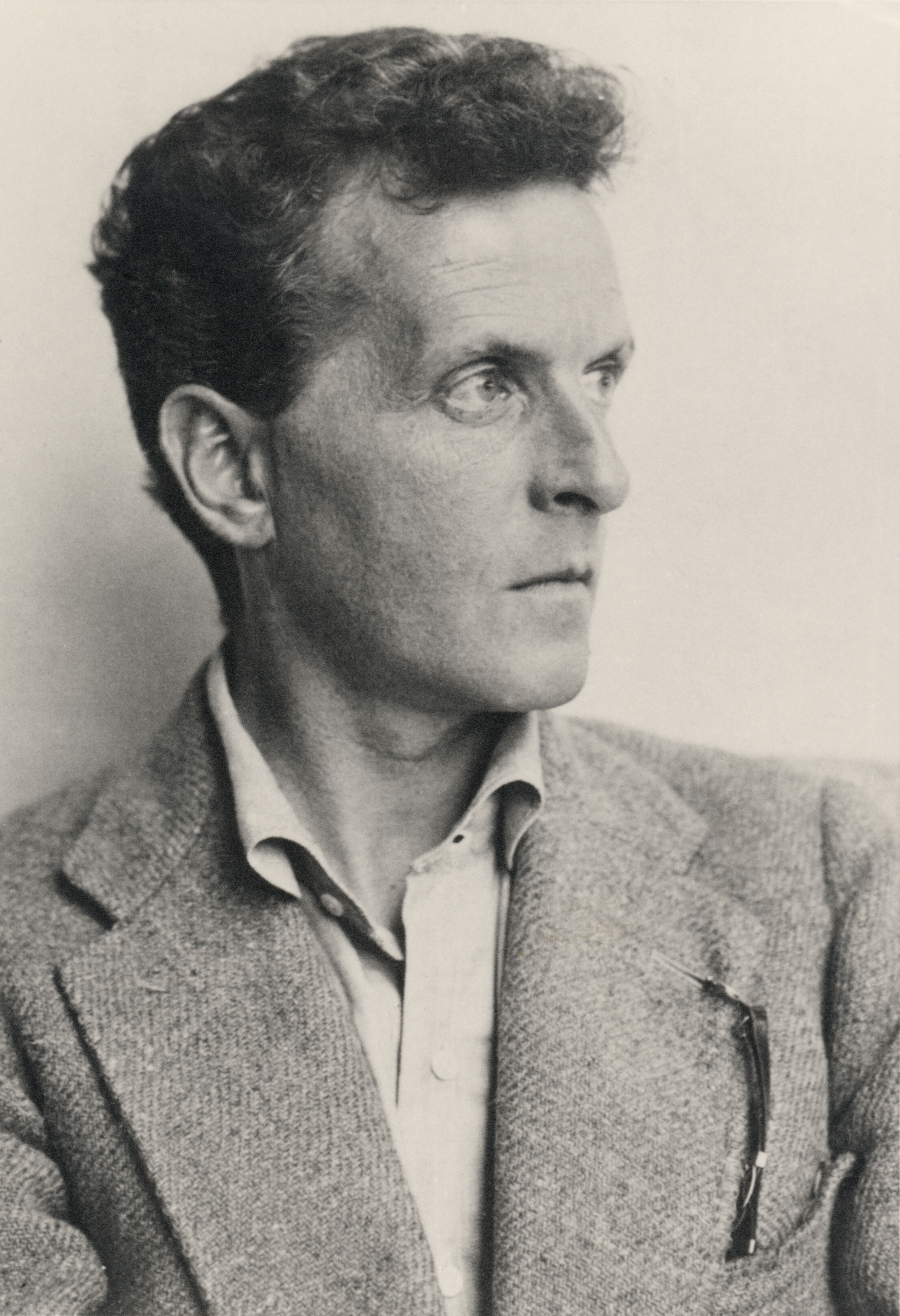
Ludwig Wittgenstein, 1930
The meaning I am looking for today is what we mean when we talk about our beliefs, how we understand what is said when we say “I believe…” or, I guess more often today, when we say “I don’t believe…”.
These kinds of statements, even when made in private, always have an audience, either actually there or imagined.  First off, we are saying them in a language that we have learned from others and use within a community.  
We don’t get to decide what a word means or how a language works, no matter how much we can push the boundaries of it. The more we nudge words outside their usual use the less likely our audience will understand what we mean, and the harder time we will have being sure we know what we mean ourselves.  Sound extreme?  Ask yourself how clear you are on something when you can’t share it with anyone else.  If you find yourself unable to describe it, explain it, or even show it, then you are going to have some doubts about it. 

      I spoke about nudging ‘words outside their usual use’.  We don’t learn language by understanding what one word means using a series of others.  We would never be able to begin, if that was how language worked.  We don’t learn language by clearly setting out and agreeing on terms up front; we need to already have language to be able to do that.  Rather, we learn language by doing things.  We learn to sit in chairs, to pass the sugar, to find the bathroom; and the more we do things with others the more our language grows, and the more complicated the things we do as a group, the more complicated our language becomes.  This starts right from our first words and carries on throughout our lives.  We’ve all started a new job and felt a bit lost till we were in on the buzzwords and shortenings; we’ve all taken up a hobby and at first felt bewildered by the array of new terms and phrases.  Those of us who have lived abroad and learnt a new language will recall how we moved from translating every foreign word back into a word from our mother tongue, and finally came to a place we could say and think and even feel things in the new language that we were unable to quite express in our first one. 

This fascinating book says a lot more
about how languages don't exactly match.
I’ve dwelt on this longer than I intended, but it is important because when we say “I believe...” we are saying it not just in our mother tongue, we are saying it in a certain ‘work’ or ‘hobby’ environment too.  We are saying it in the context of doing something together, simple or very complex: we are saying it in the context of doing something.  If what I am doing and what you are doing are not the same, if I am talking in terms of one environment and you in terms of another, then we may as well be talking two different languages.


      When we say “I believe…” we are conversing within a community and we are trying to do something specific within that conversation.  When we fail to acknowledge that community and to accept what is being aimed at we cut ourselves off from conversation and can only enter into conflict.  At the heart of that conflict is the need to impose on the other what we understand by the words they are using, and that need is driven by the deep desire to understand ourselves.  Socrates, in Plato’s dialogue Alcibiades I, speaks of how we see ourselves in the mirror that is the eyes of others.  Well: imposing what we want words to mean is rather like painting over that mirror with the portrait we’d like to see.  When we succeed in doing it, we harm the other and lose sight of ourselves as well.
"The Portrait of Dorian Gray" by Oscar Wilde
      If we are going to have fruitful conversations around what we believe — and even more so if we are going to build fruitful communities around what we believe — we need to learn to look into the eyes of others.  We need to realise that belief is something that isn’t about the sound of words or how we try to draw out the concepts; it’s about how we live.
In the Bible, ‘truth’ is something that is done not just said; knowing is about relationships, not just being right and being able to explain why.  I bring up the Bible here, not to rely on its authority, but because it relays thousands of years of human religious experience and because it is central to the community and culture in which many of us, myself most certainly, talk about our beliefs.  Whether we say “I believe …” or “I don’t believe …” we, here in the West, are talking in the shadow of that dominant narrative.  Our communities have splintered into smaller communities each with their own divergent stance to that narrative, but it is there for the Atheist Humanist, the Pagan Revivalist, and the Cultural Agnostic, as much as for the Roman Catholic, Protestant, or Non-Conformist.

       Acknowledging the role of language, and its reliance on communities and what we are trying to do at any given time, might sound like it is making saying “I believe...” difficult, like it’s making the conversation around that nigh-on impossible, but it isn’t.  All our language is rooted in the experiences we share, the things we can and can’t do, the world we live in as ourselves, the things we can’t change that set the stage for the things we can.  Language works, for all its nuance and contextuality, because language is how we live in a world we share.  We can say “I believe…” because of that shared world, that shared experience, that shared interplay of what we can and can’t change. 
If we put in the work to understand the conversation that is being had when we say “I believe …”, if we can hold back with pushing what we think ‘should’ be meant with the words, if we can actually engage with what is trying to be done in that moment, then we can begin to grow together and in looking into another’s eyes we can begin to see ourselves better too. 

      Belief is never purely intellectual: it is about how we live our lives, why we make our choices.  I hope we can explore that together, I hope we can share that together, and I know that if we do together, we’ll find that our language will bring us eventually more together, however much it may hold us apart for now.