Showing posts with label conversation. Show all posts

13 May 2020

In the beginning was the doing and the doing became the Word - how to say "I believe" as part of conversation

“I believe…”
      I’m going to ask you to bear with me.  There are going to be times you want to jump in and point out things that are problematic, things you don’t agree with, things that need rounding off or balancing out.  Don’t do it.  I won’t take your silence for agreement and I ask you to not take any of mine for deliberate avoidance or ‘tacit denial’.  I’m going to advance a position today that suggests that what we say takes its meaning from the conversation we are having, and that that conversation is framed within the community, culture, and ‘way of life’ we find ourselves in.  This isn’t my idea, so I am not going to build it up from the foundations.  If you fancy checking it out in detail give Wittgenstein’s Philosophical Investigations a look. 
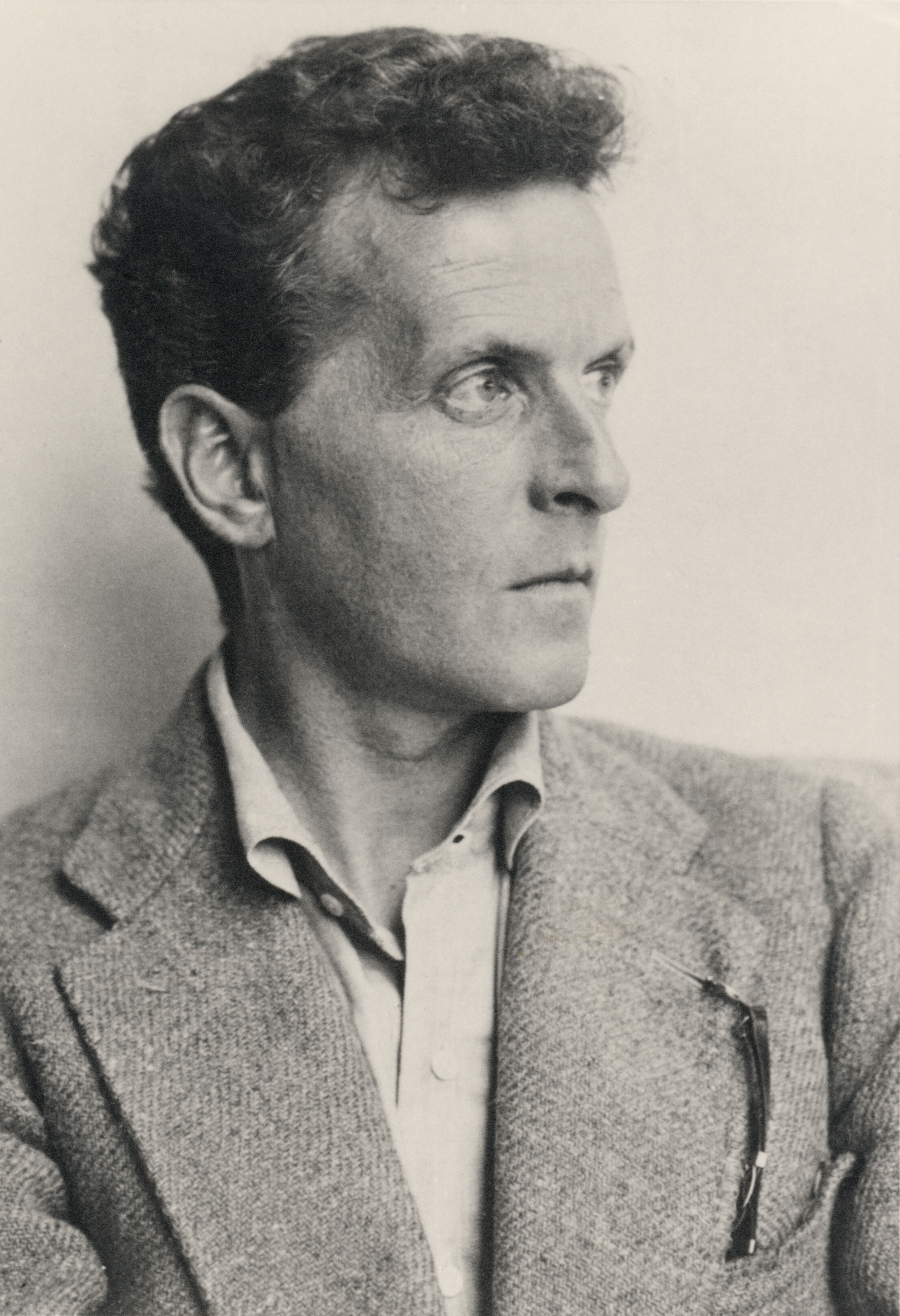
Ludwig Wittgenstein, 1930
The meaning I am looking for today is what we mean when we talk about our beliefs, how we understand what is said when we say “I believe…” or, I guess more often today, when we say “I don’t believe…”.
These kinds of statements, even when made in private, always have an audience, either actually there or imagined.  First off, we are saying them in a language that we have learned from others and use within a community.  
We don’t get to decide what a word means or how a language works, no matter how much we can push the boundaries of it. The more we nudge words outside their usual use the less likely our audience will understand what we mean, and the harder time we will have being sure we know what we mean ourselves.  Sound extreme?  Ask yourself how clear you are on something when you can’t share it with anyone else.  If you find yourself unable to describe it, explain it, or even show it, then you are going to have some doubts about it. 

      I spoke about nudging ‘words outside their usual use’.  We don’t learn language by understanding what one word means using a series of others.  We would never be able to begin, if that was how language worked.  We don’t learn language by clearly setting out and agreeing on terms up front; we need to already have language to be able to do that.  Rather, we learn language by doing things.  We learn to sit in chairs, to pass the sugar, to find the bathroom; and the more we do things with others the more our language grows, and the more complicated the things we do as a group, the more complicated our language becomes.  This starts right from our first words and carries on throughout our lives.  We’ve all started a new job and felt a bit lost till we were in on the buzzwords and shortenings; we’ve all taken up a hobby and at first felt bewildered by the array of new terms and phrases.  Those of us who have lived abroad and learnt a new language will recall how we moved from translating every foreign word back into a word from our mother tongue, and finally came to a place we could say and think and even feel things in the new language that we were unable to quite express in our first one. 

This fascinating book says a lot more
about how languages don't exactly match.
I’ve dwelt on this longer than I intended, but it is important because when we say “I believe...” we are saying it not just in our mother tongue, we are saying it in a certain ‘work’ or ‘hobby’ environment too.  We are saying it in the context of doing something together, simple or very complex: we are saying it in the context of doing something.  If what I am doing and what you are doing are not the same, if I am talking in terms of one environment and you in terms of another, then we may as well be talking two different languages.


      When we say “I believe…” we are conversing within a community and we are trying to do something specific within that conversation.  When we fail to acknowledge that community and to accept what is being aimed at we cut ourselves off from conversation and can only enter into conflict.  At the heart of that conflict is the need to impose on the other what we understand by the words they are using, and that need is driven by the deep desire to understand ourselves.  Socrates, in Plato’s dialogue Alcibiades I, speaks of how we see ourselves in the mirror that is the eyes of others.  Well: imposing what we want words to mean is rather like painting over that mirror with the portrait we’d like to see.  When we succeed in doing it, we harm the other and lose sight of ourselves as well.
"The Portrait of Dorian Gray" by Oscar Wilde
      If we are going to have fruitful conversations around what we believe — and even more so if we are going to build fruitful communities around what we believe — we need to learn to look into the eyes of others.  We need to realise that belief is something that isn’t about the sound of words or how we try to draw out the concepts; it’s about how we live.
In the Bible, ‘truth’ is something that is done not just said; knowing is about relationships, not just being right and being able to explain why.  I bring up the Bible here, not to rely on its authority, but because it relays thousands of years of human religious experience and because it is central to the community and culture in which many of us, myself most certainly, talk about our beliefs.  Whether we say “I believe …” or “I don’t believe …” we, here in the West, are talking in the shadow of that dominant narrative.  Our communities have splintered into smaller communities each with their own divergent stance to that narrative, but it is there for the Atheist Humanist, the Pagan Revivalist, and the Cultural Agnostic, as much as for the Roman Catholic, Protestant, or Non-Conformist.

       Acknowledging the role of language, and its reliance on communities and what we are trying to do at any given time, might sound like it is making saying “I believe...” difficult, like it’s making the conversation around that nigh-on impossible, but it isn’t.  All our language is rooted in the experiences we share, the things we can and can’t do, the world we live in as ourselves, the things we can’t change that set the stage for the things we can.  Language works, for all its nuance and contextuality, because language is how we live in a world we share.  We can say “I believe…” because of that shared world, that shared experience, that shared interplay of what we can and can’t change. 
If we put in the work to understand the conversation that is being had when we say “I believe …”, if we can hold back with pushing what we think ‘should’ be meant with the words, if we can actually engage with what is trying to be done in that moment, then we can begin to grow together and in looking into another’s eyes we can begin to see ourselves better too. 

      Belief is never purely intellectual: it is about how we live our lives, why we make our choices.  I hope we can explore that together, I hope we can share that together, and I know that if we do together, we’ll find that our language will bring us eventually more together, however much it may hold us apart for now. 


30 December 2019

The #Unitarian movement - unlike other churches when it comes to the “why”


I have been reflecting on the podcast here, https://theministryofchange.org/podcast/2019/11/9/liz-slade-spirituality-community-and-collective-wellbeing    which is an interview with the Chief Officer of the UK Unitarian movement, Liz Slade.  There is a transcript of the interview available at the same link, if you prefer.

Liz speaks about some of the things that have been traditionally found within religions and Churches, things that remain essential with respect to human wellbeing but which need to be transferred out of religious formats that people are now not very interested in, and transferred into formats that  are more accessible and more meaningful today.

Yet Liz suggests that despite its limitations, the language of religion can still convey nuances that are more connective and more profound than purely civic language, or evidence-based language.  That, therefore, we should not throw the baby out with the bathwater.  Personally I would extrapolate this comment of hers from referring to the language of religion to also include some of the forms of religion.  That is because I consider that religious conversation and dialogue cannot be purely word-based; actions and silences contribute so much to human wellbeing.

But Liz’s words speak for themselves; it was a follow-on thought I had, which I wanted to write about.

Today’s Unitarian movement would, if you let it, be reasonably directive of the “what” of religion, much like other religions and Churches; but it then shifts back a gear to making suggestions, only, about the “how” of religion; and as for the “why” of religion, once one gets beyond the blindingly trite answer that it seems to people to help them in some way, the Unitarian movement begins to look distinctly evasive.  


Certainly, if you participate in dialogue in Unitarian settings you will be exposed to core or key teachings of many world religions. And thoughts from other spheres of human thought, such as the arts, philosophy, and science, are also given prominence.  But in no sense are any of these brought forward as anything other than food for thought, and vehicles for dialogue. 

I think there is much crossover between the Unitarian movement and other traditions about the “what” of religion.  I suggest that the “what” of religion that Unitarians would recognise is about ‘making change within yourself through relatedness to what lies external to yourself.’ The “what” of religion is, perhaps, swinging as a pendulum between the pole of self-examination combined with revision of intent and practice, and the pole of co-acting in the world for the betterment of the whole.  About taking responsibility not only for yourself but for what lies beyond yourself, and about being receptive to feedback of all sorts as you co-act in the world out there.  The Unitarian movement lays a heavy emphasis on co-creation, on action as well as conversation, on - as Liz Slade puts it - getting rid in oneself of any consumerist attitude one might be tempted to adopt in taking part in church activities.  Unitarians would be pretty firm that religion is not something one can do on one’s own.  Admittedly, the language around such solitary activity is not well developed; but unless something which is going on interiorly has some exterior connection, it probably isn’t of much relevance, anyway.


The “how” of religion is more nebulously dealt with.  Unitarians and their churches have evolved slowly rather than being part of disruptive change and so many of the forms that are suggested or adopted show their heritage as a continuation of practice in place for hundreds of years.  So the “how” of religion gatherings tend to adopt features such as hearing readings; singing songs; holding periods of silence; listening to an individual person’s perspective on their own researches, reflections or experiences.  There is, increasingly, recognition for the need to co-create during gatherings and for all contributions, in all manners, to be respected as essential components if a  gathering is to be worthwhile.  Nationally, there are opportunities designed to support group and individual exploration, and at the congregational level there is much encouragement to proceed with personal exploration in between gatherings, so there can be news to be shared about those explorations, when next a gathering takes place.  

But whilst regular, reflective gatherings of Unitarians are necessary if there is to be an expression of the wholeness of our humanity, such gatherings are not sufficient. There is also the need for connective co-creation over a broader front.  As in any traditional religion, there is a great emphasis towards acting together for causes that are external to the movement.  There are groupings and associations within the movement that explicitly aim at wider social justice action.  Congregations are self-governing so any social action that is agreed by that congregation can be undertaken. And the breadth of individual actions that aim beyond personal advantage are always celebrated.  The need to balance reflection and action is probably the most directive Unitarian guidance on the “how” of religion.


But the “why” is much less clear.  Ask for the nuts-and-bolts “why” of traditional religions and you may get quite concrete answers: “Because only by doing this will you break out of the unending wheel of lifetimes and find the clarity and awareness that is at the heart of the universe.”  “Because taking these actions will appease the goddesses, gods and spirits that wield control over all that happens to us.”  “Because these instructions for life have been handed down directly from God to his prophets and from them to us so it is meet for us, right for us and even incumbent upon us to follow these instructions, for the sake of God’s love, justice and mercy.”  “Because God showed his love for us by bringing into the world his son Jesus, who then has paid the price for all time of all our misdoings, and it is our duty and our joy to exercise our free will in line with God’s will.”


But there is no one, clear, articulated, root, at bottom reason that is ever given by the Unitarian movement.  That doesn’t mean that there is no “why” for Unitarians personally.  It means there is one “why” each.  And the movement as a body witnesses to the fact that there are as many motivations and root reasons for the “why” of religion as there are people to experience them.  Although other, traditional religions also recognise the multiplicity of standpoints held by their adherents, they nonetheless attempt to find a broadly acceptable formula to anchor their membership, with varying degrees of success.  But if you ask the Unitarian movement for the “why” of religion, you will probably receive a response in the form of another question: ‘well, what is the “why” for you?’


The curious consideration this may lead us to is this: would a “why” of religion be more powerful if - in a compromised and slightly diluted fashion - it were approximately held by a large number of people, sometimes feeling uncomfortable with elements of it; or if, in a 100%, unadulterated way, it cut through to the quick, to the very heart, of one single private person, driving their entire being? 

13 March 2017

March 2017 meeting for reverence - balancing individual responsibility with letting go #unitarians

We had a beautiful meeting for reverence this morning which was centred around two extracts from the book "When I See the Wild God"  When I See the Wild God : Ly de Angeles : 9780738705767  

The chalice lighting words were an invitation to stand together with all others everywhere who were meeting together today in their search for truth and justice in freedom, living a life mindful of the divine.

The readings drew to our attention the connections we have with physical creation, through our bodies, and with both the overarching and more local human cultures we live in, through narrative, knowledge and experience.  A new idea to some of us was that our bodies have lived since the beginning of time and will live after our death to this life on Earth (as every atom in our bodies has been around since the beginning of time).  The difficulty in reconciling the ideas of “the one” and “the many” were remembered, with particular reference to J. R. R. Tolkien’s The Silmarillion


We were invited to consider the balance that has to be struck between

being part of the unending creation song (so being able to relax in the knowledge that our own pain, turmoil, joy and love do not actually stop the enduring song of creation)
and
the duty to be authentic, each moment, each decision, to the person we believe ourselves to be (no matter how hard that may be).


We sang some lovely little hymns, hidden gems in the Hymns for Living hymnbook; and were invited to spend our seven minute meditation time reflecting on how we had contributed to the creation song in the past week, and how we might attempt in the coming week to live authentically in line with who we believe ourselves truly to be.


We also lit candles for the things that concern us or which are current joys, and enjoyed a good conversation over coffee afterwards.  Our wide-ranging conversation pivoted around the concept of long-lived relationships, in family, friendship and – interestingly – commercial terms; and how modern day living seems to care little for loyalty.

We wondered how the current fashion for changing employment, leaving our family roots, and losing touch with friends from adolescence will affect society in the future.  And we concluded with the hope, if not complete trust, that people will always find a way to grace and happiness if they want to, regardless of the prevailing social conditions.


11 May 2015

May 2015 meeting


Our meeting for reverence and worship this month had a look at the Buddhist logic for compassion, and led onto some practical actions that we can take to develop our power of compassion.  These include actively responding, inwardly, when we notice the feeling of compassion arising in ourselves; focusing on that feeling and allowing it to develop, and not just ignoring it or fending it off.  Then the Tibetan Buddhist source reading reminded us that there are all sorts of excuses to not outwardly act on our feeling of compassion, but excuses are self-defeating – because one of the best ways to develop ourselves as humans is to work in the world for the well-being of other beings.  We were encouraged to appeal to our inner Buddha-nature, the archetype of the perfect human being within us, by using a little prayer, easy to remember and to repeat during our daily round: “Bless me into usefulness.”

We remembered that it’s not just professionally religious or theological people who teach us about becoming all of a piece with the universe: we heard some words spoken by Albert Einstein about the whole that is the universe, which includes us as parts, lost in our own delusions.  And we listened to a fresh, simple song by Paul McCartney, saying “it’s there, it’s round, it’s to be found in you, in me – it’s all we ever wanted to be.”

We sang two hymns, one about compassion; and the second, which may yet become the anthem for small Unitarian congregations, about how even the tiniest action makes a difference.  We had a period of silent personal practice, and we lit candles and spoke about our concerns and connections. It was good to hold in mind our neighbouring Unitarian congregations at Southampton and Bridport, whom we have visited relatively recently.

In our coffee discussion afterwards we started talking about an additional meeting format we might introduce in 2016.  Something at a different time, when buses are running in the district, and when there are lots of people around – perhaps coming out of work.  With conversation, and candles, and coffee/tea.  Perhaps based on pre-announced topics or perhaps just people bringing their own inspiration on the day.  We would want to hire the Meeting House for this.  We would need a catchy name for it, though – albeit utterly honest, “After Work Candles, Coffee and Conversation” might be just a bit too cumbersome !  We will be thinking about this new initiative over the next few months.

After the meeting we set up a collection point for Christian Aid to boost the Ringwood awareness of Christian Aid Week, and to build on our involvement with the sponsored swim that started on the evening of Saturday 9 May  https://www.justgiving.com/CTIR/   It was good to collect some more donations for this amazing effort organized by Churches Together in Ringwood, which went on right into the small hours of Sunday morning, and by the end was the equivalent of a cross-Channel relay swim.


16 April 2015

April 2015 meeting

Our group mixes people whose paths include influences ranging from a liberal interpretation of the teachings of Jesus and western Christian practice, also from Paganism, through classical philosophy, to Tibetan Buddhism.  Our worship on 10 April took the form of a simple ritual in silence, some readings, and some chanting.  The theme was “Sacred Fools” and the readings from “Apology” by Plato (pictured left) and “The Devils Picture Book” by Paul Husson were well received.  After that we heard the meeting leader’s personal reflections on the readings – why Socrates knowing that he did not know made him the wisest, and a reflection on The Fool  (Le Fou in French, pictured right) in the tarot deck respectively.  We enjoyed our chants very much and also our conversation over a long coffee afterwards.

We look forward to the next service when we know there will be more people.  And we welcome anyone with a curiosity about what we say, what we do, and how we manage to worship together when we have such different paths of faith.

14 November 2014

Study Course on Spiritual Health starting in January


Join us, starting early in January on an open course of exploration titled “Twelve Steps to Spiritual Health”.  Over twelve weeks we are going to work our way through the book by David Usher, as shown on the "books" tab on this website.  The course will take the form of individual book study supported by group discussion.  We’ll meet as a group at the Ringwood Meeting House and History Centre, Meeting House Lane, on Wednesday lunchtimes.

The course does not assume you hold any formal belief system or religious affiliation, although it does draw inspiration from a wide range of world faiths.

The author of the book, David Usher, is a Unitarian minister who after some years serving UK congregations is now serving in the USA.  David has said that spiritual life is about being fully alive, and his book is a practical manual for anyone seeking life measured by quality and intensity, not quantity.

If you are interested, you should be willing to be led out of your familiar comfort zone at some point, in order to become open to life’s possibilities and to become able to withstand its disappointments.

You will need to buy your own copy of the book and to pay the usual admission to the Meeting House for each one of the group meetings you are able to come to.  Although it is encouraged, you might not have to commit to the full twelve week course.

For further details and to register an interest in the course, telephone Lucy on 07899 730181 (answerphone available).


15 July 2013

What Unitarians are saying in 2013 in Ringwood coffee houses

So if you have stayed with this blog so far, what's first then?  Well, let's do what humans always want to do when there's something to be talked about - sit down and have tea or coffee together.

We need, probably, to have some start point for our conversation.  What is the Unitarian message?