Showing posts with label life. Show all posts

13 August 2021

Wholeness is not the same as fullness - emptiness is also needed for becoming - Ringwood Unitarians gathering in August 2021

Still not ready to meet face to face in the prevailing pandemic conditions, in August 2021 we gathered once again on Zoom.  We started our meeting by holding silence, so that we could each do the equivalent of (silently) reciting our personal creed.

The theme of meeting for reverence was ‘wholeness’ in contrast with human brokenness, and it pivoted around some words by the American author Oriah Mountain Dreamer: “When we surrender, when we do not fight with life when she calls upon us, we are lifted, and the strength to do what needs to be done finds us, because we have remembered that we can choose to serve the only cause that matters: life herself.”


We heard readings from Taoism (from the Tao Teh Ching, contrasting emptiness and busy-ness), and Christianity (a story from the Desert Fathers and Mothers on becoming whole enough to see to the heart of things).  We heard that the Buddha’s original message seems to have been cast in positive form – as common sense would expect, his teaching was a call to the ‘more’ of life, not to the ending of it, and certainly not a call to run away from an imperfect world.


We had some prayers and meditations including a meditation by Richard S. Gilbert on a comment by Dåg Hammarskjold regarding our chalice of being (how each day we receive, we carry, we give back).  The reflection had also included an insight on the importance of space and silence if we are to be truly whole, rather than just ‘full’ or occupied.  One participant said, “It made me think of the constellations in the sky.  We think of them as pictures drawn in the stars and yet there is more darkness than light to them.  It is on the space between the stars that we see the shapes form.”


In the self-contained way that has to be used during online gatherings, we sang two hymns from our green hymn books, which focused on the Life that makes all things new and the ‘human becoming’ in oneness and sharing.  After our candles of joys and concerns which turned out to be focused on the darker side of living, it was good to watch a YouTube video in which many sorts of different animals greeted their human companions with what can only be described as hugs.


13 May 2020

In the beginning was the doing and the doing became the Word - how to say "I believe" as part of conversation

“I believe…”
      I’m going to ask you to bear with me.  There are going to be times you want to jump in and point out things that are problematic, things you don’t agree with, things that need rounding off or balancing out.  Don’t do it.  I won’t take your silence for agreement and I ask you to not take any of mine for deliberate avoidance or ‘tacit denial’.  I’m going to advance a position today that suggests that what we say takes its meaning from the conversation we are having, and that that conversation is framed within the community, culture, and ‘way of life’ we find ourselves in.  This isn’t my idea, so I am not going to build it up from the foundations.  If you fancy checking it out in detail give Wittgenstein’s Philosophical Investigations a look. 
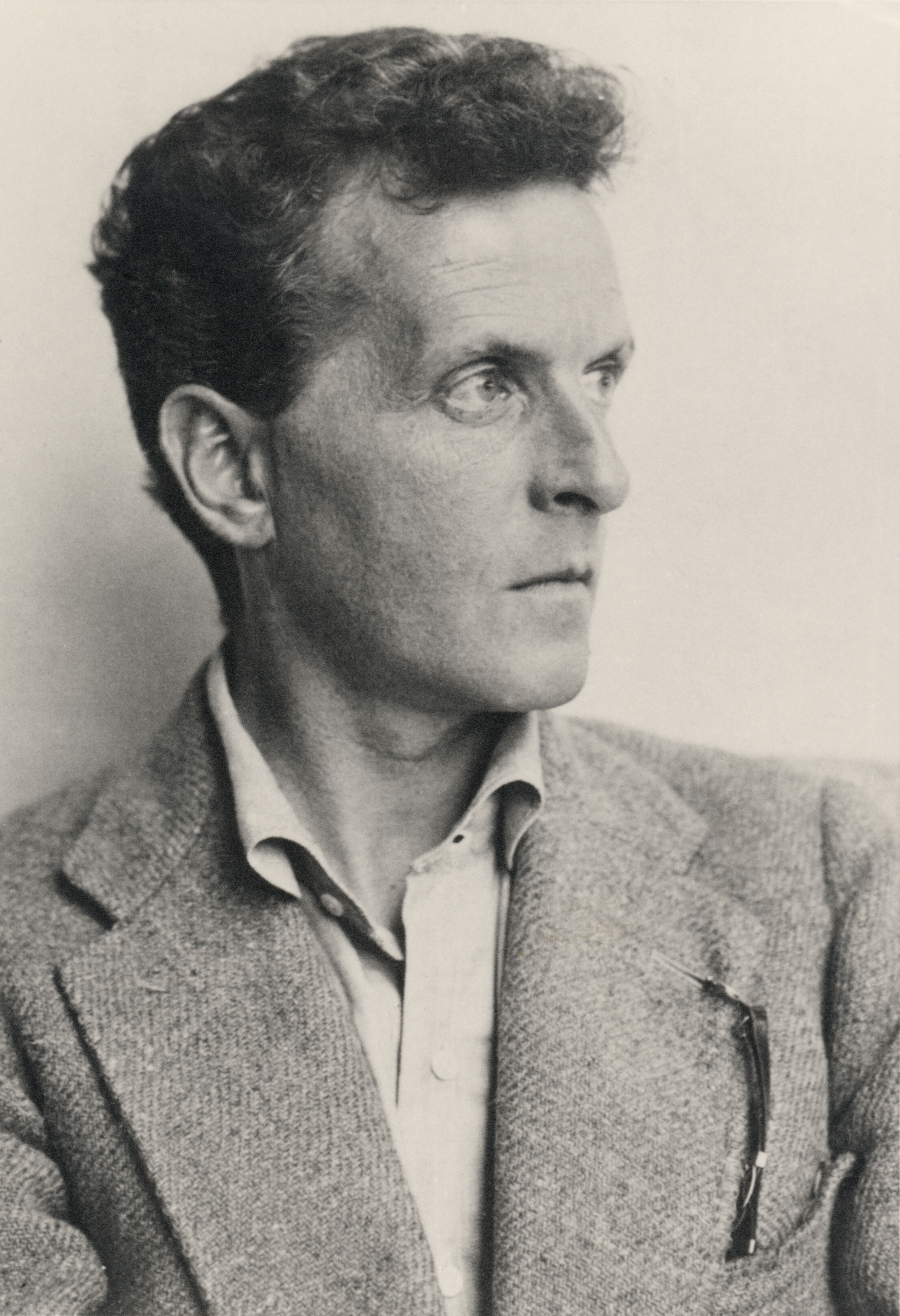
Ludwig Wittgenstein, 1930
The meaning I am looking for today is what we mean when we talk about our beliefs, how we understand what is said when we say “I believe…” or, I guess more often today, when we say “I don’t believe…”.
These kinds of statements, even when made in private, always have an audience, either actually there or imagined.  First off, we are saying them in a language that we have learned from others and use within a community.  
We don’t get to decide what a word means or how a language works, no matter how much we can push the boundaries of it. The more we nudge words outside their usual use the less likely our audience will understand what we mean, and the harder time we will have being sure we know what we mean ourselves.  Sound extreme?  Ask yourself how clear you are on something when you can’t share it with anyone else.  If you find yourself unable to describe it, explain it, or even show it, then you are going to have some doubts about it. 

      I spoke about nudging ‘words outside their usual use’.  We don’t learn language by understanding what one word means using a series of others.  We would never be able to begin, if that was how language worked.  We don’t learn language by clearly setting out and agreeing on terms up front; we need to already have language to be able to do that.  Rather, we learn language by doing things.  We learn to sit in chairs, to pass the sugar, to find the bathroom; and the more we do things with others the more our language grows, and the more complicated the things we do as a group, the more complicated our language becomes.  This starts right from our first words and carries on throughout our lives.  We’ve all started a new job and felt a bit lost till we were in on the buzzwords and shortenings; we’ve all taken up a hobby and at first felt bewildered by the array of new terms and phrases.  Those of us who have lived abroad and learnt a new language will recall how we moved from translating every foreign word back into a word from our mother tongue, and finally came to a place we could say and think and even feel things in the new language that we were unable to quite express in our first one. 

This fascinating book says a lot more
about how languages don't exactly match.
I’ve dwelt on this longer than I intended, but it is important because when we say “I believe...” we are saying it not just in our mother tongue, we are saying it in a certain ‘work’ or ‘hobby’ environment too.  We are saying it in the context of doing something together, simple or very complex: we are saying it in the context of doing something.  If what I am doing and what you are doing are not the same, if I am talking in terms of one environment and you in terms of another, then we may as well be talking two different languages.


      When we say “I believe…” we are conversing within a community and we are trying to do something specific within that conversation.  When we fail to acknowledge that community and to accept what is being aimed at we cut ourselves off from conversation and can only enter into conflict.  At the heart of that conflict is the need to impose on the other what we understand by the words they are using, and that need is driven by the deep desire to understand ourselves.  Socrates, in Plato’s dialogue Alcibiades I, speaks of how we see ourselves in the mirror that is the eyes of others.  Well: imposing what we want words to mean is rather like painting over that mirror with the portrait we’d like to see.  When we succeed in doing it, we harm the other and lose sight of ourselves as well.
"The Portrait of Dorian Gray" by Oscar Wilde
      If we are going to have fruitful conversations around what we believe — and even more so if we are going to build fruitful communities around what we believe — we need to learn to look into the eyes of others.  We need to realise that belief is something that isn’t about the sound of words or how we try to draw out the concepts; it’s about how we live.
In the Bible, ‘truth’ is something that is done not just said; knowing is about relationships, not just being right and being able to explain why.  I bring up the Bible here, not to rely on its authority, but because it relays thousands of years of human religious experience and because it is central to the community and culture in which many of us, myself most certainly, talk about our beliefs.  Whether we say “I believe …” or “I don’t believe …” we, here in the West, are talking in the shadow of that dominant narrative.  Our communities have splintered into smaller communities each with their own divergent stance to that narrative, but it is there for the Atheist Humanist, the Pagan Revivalist, and the Cultural Agnostic, as much as for the Roman Catholic, Protestant, or Non-Conformist.

       Acknowledging the role of language, and its reliance on communities and what we are trying to do at any given time, might sound like it is making saying “I believe...” difficult, like it’s making the conversation around that nigh-on impossible, but it isn’t.  All our language is rooted in the experiences we share, the things we can and can’t do, the world we live in as ourselves, the things we can’t change that set the stage for the things we can.  Language works, for all its nuance and contextuality, because language is how we live in a world we share.  We can say “I believe…” because of that shared world, that shared experience, that shared interplay of what we can and can’t change. 
If we put in the work to understand the conversation that is being had when we say “I believe …”, if we can hold back with pushing what we think ‘should’ be meant with the words, if we can actually engage with what is trying to be done in that moment, then we can begin to grow together and in looking into another’s eyes we can begin to see ourselves better too. 

      Belief is never purely intellectual: it is about how we live our lives, why we make our choices.  I hope we can explore that together, I hope we can share that together, and I know that if we do together, we’ll find that our language will bring us eventually more together, however much it may hold us apart for now. 


10 August 2015

August meeting for reverence


We started our meeting by holding silence, so that we could each do the equivalent of (silently) reciting our personal creed.  And we followed that with our usual ritual of passing fire, bread, water, and – a new tool for us in the form of a fan of ravens’ and pigeons’ feathers – air, around our circle of fellowship.  After partaking, these four signifiers are placed on the table between us.

The theme of meeting for reverence was “wholeness”, and it pivoted around some words by the American author Oriah Mountain Dreamer: “When we surrender, when we do not fight with life when she calls upon us, we are lifted, and the strength to do what needs to be done finds us, because we have remembered that we can choose to serve the only cause that matters: life herself.”

We had some prayers and meditations including a meditation by Richard S. Gilbert on our chalice of being, and we heard readings from Taoism (from the Tao Teh Ching) and Christianity (a story from the Desert Fathers and Mothers).  We heard that the Buddha’s original message seems to have been cast in positive form – as common sense would expect, his teaching was a call to the “more” of life, not to the ending of it, and not to the running away from an imperfect world.

We sang two hymns from our green hymn books, which focused on the Life that makes all things new and the “human becoming” in oneness and sharing.  We also heard a contemporary take on revivalist music – very uplifting after our candles of joys and concerns which turned out to be focused on the darker side of living.

02 April 2015

A personal view of Maundy Thursday

 
Bear in mind, dear reader, that this post, like all the posts on this blog, has been supplied by one of the Ringwood Unitarians - and not necessarily always the same one.  It should not be assumed that any other Ringwood Unitarian, or any Unitarian from anywhere, thinks or feels the same as this. Or that the rest of our Ringwood group are even interested in this train of thought.  That’s the beauty of any Unitarian community – we worship and we connect, but we don’t expect each other to think about the same things or to think or feel in the same way.

It’s Maundy Thursday today.  That’s the day of the Jewish Passover.  The rabbi Jesus and his friends had gone to Jerusalem for the Passover festival, for the celebratory worship of the just and merciful God, who allowed the Hebrew slaves in Egypt to escape the deaths overnight of the first-born, which God inflicted on the then unresponsive and cruel slave masters, the Egyptians.  It is the festival that recognises that God, or Life, will act kindly towards people who act in accordance with the edicts that God, or Life, demands.  This recognition is portable from Judaism right through all the faiths, right across the spectrum of faiths, even to an oriental belief system that shies a long way away from the Jewish idea of a “personal God”, by which I mean Taoism.  Passover, or pesach, is a festival for all those who have had a good experience of their faith.
So Jesus and his friends and family sat down to the Passover meal, the seder meal, to quietly await the arrival of the next day, the commemoration of the day when Hebrews woke up to find that God’s word had been carried out – so the Egyptians were shocked and frightened to find their first-borns had died and the Hebrews now had to get out of Egypt very quickly.
And over that seder meal Jesus seemed to be very sure that his time was coming to an end.  Perhaps he too was shocked and frightened; or perhaps he thought that within a day or two it would be his followers who would be shocked and frightened.  You see, he had been in Jerusalem since the previous Sunday and he was aware that all sorts of people had all sorts of expectations of him that he would not necessarily fulfil. Some people wanted him to renounce some of the things he had said about his relationship to God.  Others wanted him to lead a zealous and possibly armed rebellion against the Roman occupying forces.  A few others seemed to think he was bigging up his part as a wise man with a following, at the cost of wasting money that could better have been spent on supporting the poor.  Jesus got the vibes.  He knew the show-down was coming.  So he spent some time that evening over the meal reflecting back to his followers what it was that he stood for, and asking them to remember his words always – by tying them inextricably with the bread and wine of the seder meal, which he knew they would celebrate year after year, so they would have no excuse to forget them.
And in my reading of it, the message of Jesus was this.  We are in a covenant with God – which was an old Jewish message.  We are in a relationship, said Jesus, a relationship we cannot own or control – it’s a connection we can enter.  We are loved into being, we are all sustained by love throughout our lives, and we are received in love at our ending.  Jesus lived as if it were both task and gift to strive to echo that love, right up until his life's end. 
The kingdom of God, said Jesus, this relationship, the way to lasting life lived true to our best selves, lies within; and it is accessible to all.  But to find that kingdom, to enter into that ultimate relationship with the just and loving God, you have to be prepared to let go of yourself and act in all humility.  As though you and your wants and desires were all just by-the-bye, scarcely relevant at all.  Jesus demonstrated that he thought everyone, including the most acclaimed ones amongst us, need to see ourselves as fit for the most unpleasant and menial jobs; like taking off the sandals and washing the dusty, smelly feet of our companions after a day on the Galilean plains; like taking without comment an unwarranted slap across the face; like carrying the load of someone who chose to press us into service against our plans and expectations – and not just the mile they demand of us, but an extra mile too.
My message, said Jesus, is that we have to try to mirror God – who is in all people, including the most disadvantaged and disregarded, the ones cast out by the establishment, and the ones who self-injure by getting knotted up in their pain and difficulty.  The kingdom really is there to be experienced, but you have to work very hard to put yourself last, to put yourself gracefully out of everyone else’s way, and to be prepared – despite your fear – to relinquish your own comfort and control over what is happening to you.  Look, said Jesus, I mean we have to relinquish our own safety and comfort right up to the most painful and bitter end.  Right when it hurts most, right when we don’t think we can go on, we have to stand quietly in trust, and surrender ourselves in all humility to Life, to God – both in his direct presence as we feel it, and as we feel it coming to us through other people.  Love the very people who cause you grief and pain because God is in them too – it’s the only way to be fully human.

I can’t imagine the power of the inspiration Jesus had experienced.  But I can see what a strong man he was.  What serenity and peace and fulfilment he found in his love for God and others.  How disregarding he was of himself.  And, though at the end even Jesus felt abandoned, I can see that that didn’t prevent him from offering himself to God.  What a model.

So this Maundy Thursday I celebrate the life and message of the rabbi Jesus with the unleavened bread and the wine of the thanksgiving seder meal.

14 November 2014

Study Course on Spiritual Health starting in January


Join us, starting early in January on an open course of exploration titled “Twelve Steps to Spiritual Health”.  Over twelve weeks we are going to work our way through the book by David Usher, as shown on the "books" tab on this website.  The course will take the form of individual book study supported by group discussion.  We’ll meet as a group at the Ringwood Meeting House and History Centre, Meeting House Lane, on Wednesday lunchtimes.

The course does not assume you hold any formal belief system or religious affiliation, although it does draw inspiration from a wide range of world faiths.

The author of the book, David Usher, is a Unitarian minister who after some years serving UK congregations is now serving in the USA.  David has said that spiritual life is about being fully alive, and his book is a practical manual for anyone seeking life measured by quality and intensity, not quantity.

If you are interested, you should be willing to be led out of your familiar comfort zone at some point, in order to become open to life’s possibilities and to become able to withstand its disappointments.

You will need to buy your own copy of the book and to pay the usual admission to the Meeting House for each one of the group meetings you are able to come to.  Although it is encouraged, you might not have to commit to the full twelve week course.

For further details and to register an interest in the course, telephone Lucy on 07899 730181 (answerphone available).


20 July 2014

Unitarian theology

There is nothing definitive, nothing formal, nothing official that can describe or encapsulate the mental models that Unitarians use to describe our world.  But there have been some good efforts at trying.

One of our favourite bloggers, whose blog you can link to at the bottom of this website, is Stephen Lingwood, and his latest version of what ties Unitarians together whilst setting us apart from non-religious types, is his blog entry of 17 July 2014, extracted below - cheekily, without his permission.

"Unitarianism is a theological tradition with commitments. This list could be improved, or put in different ways, but we really are committed to the following theological points:

1. There is a spiritual dimension to reality - though this should be understood as an existential claim rather than a metaphysical one. In other words there is a deeper, fuller, better, more mysterious, more alive way to live - and this is what the religions have been wrestling with for thousands of years.

2. Revelation is not sealed: the fullest truth about the nature of our lives and the universe has not once and for ever been revealed and codified at any point in the past. Instead we are part of our continuous process of seeking ever deeper, bigger and more complex understandings of this truth. We are part of a historical process of discovery.

3. The spiritual reality is imminently and fully present in the here and now. We do not look to the past for evidence of revelation or to the future for a time of fulfilment and completion. Neither should our attention be on the afterlife or some other place. Religion drives us deeper and deeper into this reality, not an escape from it.

4. Related to this is the affirmation that fundamentally reality, the universe, life is good. There is pain and tragedy, but ultimately "it was good" - it is good.

5. The human being (the human "soul" if you like) is a source and locus of spiritual reality. We are intimately involved in this: "the Highest dwells within us.... As there is no screen or ceiling between our heads and the infinite heavens, so there is no bar or wall in the soul where we, the effect, cease, and God, the cause, begins." Emerson.

6. We are One - we are deeply intertwined with one another in an "interdependent web of all existence" or an "inescapable network of mutuality" (ML King). This may be point 5 above just described in a different way. The fundamental truth of our existence is that we are not separate but deeply connected with all that is.

7. Human beings have sacred inherent worth and value. For this sacredness not to be trampled human beings must be free. Therefore relations between people should be based on free consent and not coercion.

8. Related to this is the realisation that the human race is one. We have more in common than divides us. There is not one particular people who are superior. There is a foundational equality for all people.

9. We live in an non-optimal world where the oneness and equality of all is frustrated by various systems and forces. It is a moral obligation to seek to put this right and commit to justice. Or, to put it another way, love and spirituality cannot be separated. "You cannot love God without loving your sister." Religion must lead us to a greater compassion, and any religion that does not increase our capacity for compassion is a false religion.

10. Community is necessary. We cannot live out these truths in isolation, but must enter into the discipline of community-making to live out this calling in the world.

11. We are ultimately hopeful about this universe. Not immediately, "not without dust and heat" but eventually there is a reason for hope. "All shall be well, and all shall be well, and all manner of things shall be well." "


14 July 2014

July 2014 meeting

The July worship meeting of Didymus (Ringwood Unitarians) was on Sunday 13 July.  Darren led the meeting and took the theme 'No Bystanders'.
Life happens whatever the choices we make.  And the greatest danger to the ethical life is thinking that we can 'sit this one out.'

We can choose to do nothing; we can have good reasons to do nothing; we may even be right to do nothing; but we are never not involved because of that.