Showing posts with label choices. Show all posts

18 March 2023

Wisdom and Difficult Decisions — Lent, Ukraine, COVID19 and a cable passing through the eye of a needle #Unitarians in Ringwood 12 March 2023

No that's not a typo in the title.  Only some versions of the Bible have (in the book of Matthew, chapter 19 v 24) a camel passing through the eye of a needle.  At least one version has a cable passing through the eye of a needle.  It's worth researching different versions.  Jubilee Bible 2000, Matthew 19:24 https://www.biblegateway.com/passage/?search=Matthew 19:24&version=JUB  


It’s just worth noting that the reports on this blog run the risk of misrepresenting what it feels like at one of our gatherings.  There’s not just a wordy ‘sermon’ by the president for the day.  But in order to feel the experience — of the prayer words, the mutual silences, the recorded music (dramatic incidental music as well as hymns), the heartfelt expressions of joys and concerns as we mark the movements in our lives with careful listening to each other as well as with candles — you have to be there.


It’s just that the bits that most lend themselves to a written record are the readings and the reflection on the readings by the president for the day. 


We are part of a tradition that used to centre aspirations for spiritual and societal development exclusively on the narratives inherited from the Christian Bible.  Friends of ours in sibling Unitarian congregations and broader networks may not look so much to those roots; but we in Ringwood have chosen to have a look at them as often as we can.  We are not traditional Christians, but culturally we feel more at home with wisdom from Christianity than we do with wisdom from other faiths.  We feel our tradition provides a homing ground, and something we can point at that holds us together.  So when we meet as a group we gravitate to stories from Christianity to help us with our lives, even if personally, individually, none of us necessarily goes to Christian writings as our first resort for inspiration. 


This month we were reminded that this is the Christian season of Lent, that it’s a year since Russia started the war on Ukraine, and three years since the first lockdown in UK as a result of COVID19.


During Lent we remember that the teacher Jesus is depicted as being strenuously tempted, during a long period in the wilderness out of contact with society and all the usual nourishments of home. The story of Jesus has it that he passes every test, by making decisions that put reverence and humility at the heart of his spiritual practice. He sets aside his own ‘will to power’ for the sake of ‘will to mutuality’ — in the story, Jesus is seeking a mutual relationship with the Creator. 


Regarding the failed, despicable, vanity project of invading Ukraine, aimed at satisfying the greed for continued power, largely on the part of one man, we remain shocked and dismayed as the war staggers on.  The temptation of the ‘will to power’ is there for everyone.  But let us remember that not all lunges for power are so obvious, lest we imagine that we ourselves are above them. 


On 26 March 2020, three years ago, the UK went into the first lockdown of the COVID19 pandemic. There are direct comparisons that can be drawn between Jesus’ time in the wilderness and our nation’s confinement, in which we too, all of us, were subject to temptation. We know only too well the stories of those who were unable to contain themselves, to restrain themselves to act in mutuality. The pandemic was a time when people were being asked to make important and difficult decisions, with scant information. A time when wisdom was called for, and was sometimes in short supply. 


Lent is associated with renunciation, self-discipline, resisting temptation.  It’s sort-of a ‘No pain? No gain!’ period in the calendar.  It’s a time when we get to know ourselves better by finding out just how hard it is to choose a way through when, in reality, there’s no one to police our choices but ourselves.


So our president for the day brought to our attention those times when personally we are facing really tough decisions, when we are trying to decide which path to take, whether we really know ourselves at all, and what sources of advice there might be available to us as we agonise over what to do.


With this as a backdrop there were two readings.  The first was about the rich young man who asks Jesus for advice about the next step he must take to assure his pathway to the kingdom of heaven. And the second was simply a hotchpotch of snippets from the Christian Bible regarding taking decisions, or sources of advice. It thus included words from Proverbs, Sirach, Matthew, James and Paul.


We heard the following from our president for the day.


In the first reading, the middle class, nouveau riche, or aristocratic and moneyed, young man is yet mature enough to see that a committed, personal, spiritual practice is essential for an authentic aspiration to find the kingdom of heaven. And he sees that here’s a teacher who has attracted many people. So the young man thinks Jesus might provide the key he has been looking for, over and above the faithful practice he already commits to. 


But instead of getting an answer he can handle, the young man is told to look at his outward context — there is no mention of principles, philosophies or of his inner landscape. ‘Sell all your possessions, give the money away to those who are in want of the basics, and that act of giving will generate in you lasting riches — and then come along and live with me; live like I do.’ 


The young man feels bereft and in a quandary. His preconceived complacency around the next piece of advice, his next stage of learning, has been both pinpointed and stripped from him. He is torn by the choice placed before him. He has been told he lacks only one thing. This thing. This giving away of his comfort based on worldly possessions. This shedding of his self-image as a man of consequence, in exchange for a strengthened mutuality with those who hadn’t the basics. 


The young man is a devout Jew, engaged in a robust spiritual practice. He presumably has had access to all the usual sources of advice — the Hebrew Bible, the learned men of the day (the Pharisees), the poetry and folk wisdom of the land he lives in, and the voice he hears when he is quiet enough inside. Apparently none of those sources of advice have shocked him in the way that that simple advice from Jesus shocks him.  It is as if the idea Jesus gives him was completely new to him. Yet it resonates sufficiently within him that he is unable to dismiss it. Had he known it was not for him, he could have dismissed it at once.  But he doesn’t dismiss it.  He can’t.  He hadn’t registered this idea before, and yet, now he hears it, it sounds a bell inside him. Something about this advice registers with him as true; he doesn't like it, but he can’t turn away from it. Oh! the agony. 


We are not told what he chooses to do. This story isn’t about answers.


And with that ‘unanswering’ ringing in our ears, pretty much all of what we heard afterwards was a series of questions:


Do we make decisions in a vacuum? 

What is there around about us that we could use, to help us make these sort of difficult decisions? 

What sources of advice do we have? 

Which sources can we trust? 

Quakers talk about “the leadings of God” — where are these to be found, or heard? In the natural world? In traditional narratives and writings? In face to face discussions with trusted counsellors, friends, advisers, sages? In the still small voice encountered after long inner struggle or hours of quietude? 

When there is a decision before us that is agonizing, what weight can we give to advice? Does the answer simply have to come, in the end, from inside?

Is conscience the leadings or promptings of what lies outside time and space and human imagination, or do we build it for ourselves, different in every age, based on habit and culture? A socially-constructed code of behaviour?

Or even more drastically, is conscience a genetic trick set up by our selfish DNA to exploit every opportunity towards survival? Ethics and morals nowhere in sight? 

How do we know the will of God? How would we recognise it, if it were revealed to us? How do we know the truth? How do we know God? How do we know the will of God? How do we know the nature of God?    [Spoiler: We don’t! ]

So when we are presented with advice in the face of a decision, how do we decide which advice is true? How do we decide whether advice received is relevant or useful or misleading? 

The Bible is full of advice about decisions, and their contexts.  Which angles out of all the angles offered in it might we dwell upon, as we face hard decisions? 

Setting down the Bible again, does it all come down to experience? Have we lived a life where, through chance, things went well for us after taking advice from groups of people we knew? Was something in a book we read, which we decided to act upon, instrumental in our success? Or did luck come into it when we trusted our own judgment alone?  Or have we had the other experience, of taking wise advice and making ostensibly sound judgments, and nonetheless finding life bitter and treacherous?

Why don’t I sell all my possessions and give the money to the poor? 


13 May 2020

In the beginning was the doing and the doing became the Word - how to say "I believe" as part of conversation

“I believe…”
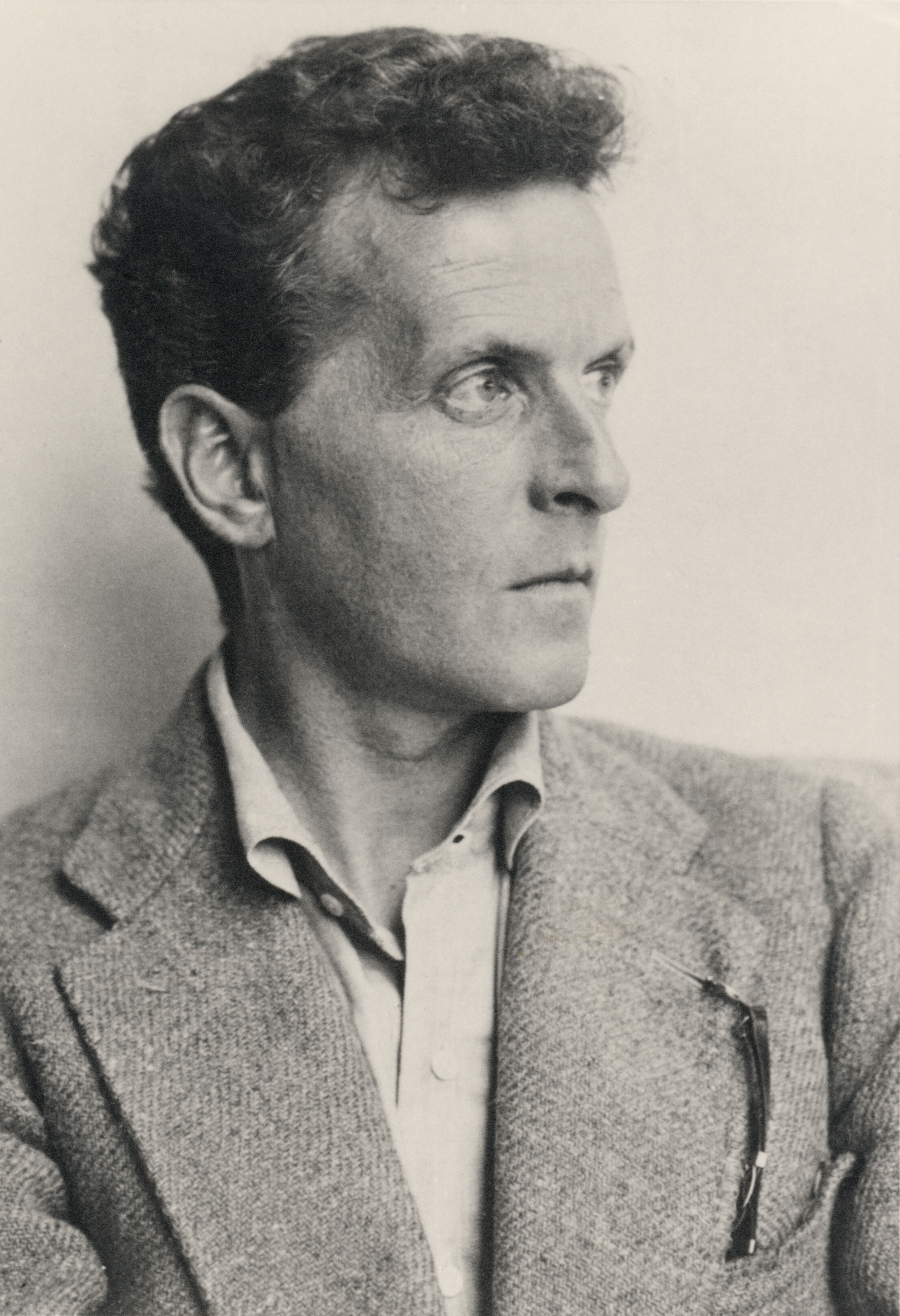
      I’m going to ask you to bear with me.  There are going to be times you want to jump in and point out things that are problematic, things you don’t agree with, things that need rounding off or balancing out.  Don’t do it.  I won’t take your silence for agreement and I ask you to not take any of mine for deliberate avoidance or ‘tacit denial’.  I’m going to advance a position today that suggests that what we say takes its meaning from the conversation we are having, and that that conversation is framed within the community, culture, and ‘way of life’ we find ourselves in.  This isn’t my idea, so I am not going to build it up from the foundations.  If you fancy checking it out in detail give Wittgenstein’s Philosophical Investigations a look. 
Ludwig Wittgenstein, 1930
The meaning I am looking for today is what we mean when we talk about our beliefs, how we understand what is said when we say “I believe…” or, I guess more often today, when we say “I don’t believe…”.
These kinds of statements, even when made in private, always have an audience, either actually there or imagined.  First off, we are saying them in a language that we have learned from others and use within a community.  
We don’t get to decide what a word means or how a language works, no matter how much we can push the boundaries of it. The more we nudge words outside their usual use the less likely our audience will understand what we mean, and the harder time we will have being sure we know what we mean ourselves.  Sound extreme?  Ask yourself how clear you are on something when you can’t share it with anyone else.  If you find yourself unable to describe it, explain it, or even show it, then you are going to have some doubts about it. 

      I spoke about nudging ‘words outside their usual use’.  We don’t learn language by understanding what one word means using a series of others.  We would never be able to begin, if that was how language worked.  We don’t learn language by clearly setting out and agreeing on terms up front; we need to already have language to be able to do that.  Rather, we learn language by doing things.  We learn to sit in chairs, to pass the sugar, to find the bathroom; and the more we do things with others the more our language grows, and the more complicated the things we do as a group, the more complicated our language becomes.  This starts right from our first words and carries on throughout our lives.  We’ve all started a new job and felt a bit lost till we were in on the buzzwords and shortenings; we’ve all taken up a hobby and at first felt bewildered by the array of new terms and phrases.  Those of us who have lived abroad and learnt a new language will recall how we moved from translating every foreign word back into a word from our mother tongue, and finally came to a place we could say and think and even feel things in the new language that we were unable to quite express in our first one. 

This fascinating book says a lot more
about how languages don't exactly match.
I’ve dwelt on this longer than I intended, but it is important because when we say “I believe...” we are saying it not just in our mother tongue, we are saying it in a certain ‘work’ or ‘hobby’ environment too.  We are saying it in the context of doing something together, simple or very complex: we are saying it in the context of doing something.  If what I am doing and what you are doing are not the same, if I am talking in terms of one environment and you in terms of another, then we may as well be talking two different languages.


      When we say “I believe…” we are conversing within a community and we are trying to do something specific within that conversation.  When we fail to acknowledge that community and to accept what is being aimed at we cut ourselves off from conversation and can only enter into conflict.  At the heart of that conflict is the need to impose on the other what we understand by the words they are using, and that need is driven by the deep desire to understand ourselves.  Socrates, in Plato’s dialogue Alcibiades I, speaks of how we see ourselves in the mirror that is the eyes of others.  Well: imposing what we want words to mean is rather like painting over that mirror with the portrait we’d like to see.  When we succeed in doing it, we harm the other and lose sight of ourselves as well.
"The Portrait of Dorian Gray" by Oscar Wilde
      If we are going to have fruitful conversations around what we believe — and even more so if we are going to build fruitful communities around what we believe — we need to learn to look into the eyes of others.  We need to realise that belief is something that isn’t about the sound of words or how we try to draw out the concepts; it’s about how we live.
In the Bible, ‘truth’ is something that is done not just said; knowing is about relationships, not just being right and being able to explain why.  I bring up the Bible here, not to rely on its authority, but because it relays thousands of years of human religious experience and because it is central to the community and culture in which many of us, myself most certainly, talk about our beliefs.  Whether we say “I believe …” or “I don’t believe …” we, here in the West, are talking in the shadow of that dominant narrative.  Our communities have splintered into smaller communities each with their own divergent stance to that narrative, but it is there for the Atheist Humanist, the Pagan Revivalist, and the Cultural Agnostic, as much as for the Roman Catholic, Protestant, or Non-Conformist.

       Acknowledging the role of language, and its reliance on communities and what we are trying to do at any given time, might sound like it is making saying “I believe...” difficult, like it’s making the conversation around that nigh-on impossible, but it isn’t.  All our language is rooted in the experiences we share, the things we can and can’t do, the world we live in as ourselves, the things we can’t change that set the stage for the things we can.  Language works, for all its nuance and contextuality, because language is how we live in a world we share.  We can say “I believe…” because of that shared world, that shared experience, that shared interplay of what we can and can’t change. 
If we put in the work to understand the conversation that is being had when we say “I believe …”, if we can hold back with pushing what we think ‘should’ be meant with the words, if we can actually engage with what is trying to be done in that moment, then we can begin to grow together and in looking into another’s eyes we can begin to see ourselves better too. 

      Belief is never purely intellectual: it is about how we live our lives, why we make our choices.  I hope we can explore that together, I hope we can share that together, and I know that if we do together, we’ll find that our language will bring us eventually more together, however much it may hold us apart for now. 


20 March 2018

The #Unitarian demand for personal responsibility in matters of spirit requires maturity - the Ringwood gathering in March 2018 looked at Letting Go


Familiar faces were gathered there together on 11th March when we met to focus on the topic of “When I was a Child” – Letting Go.


We are vulnerable when young, when inexperienced, and in many other circumstances when we are reliant on the guidance and words from others, rather than on what we have found for ourselves.


We each have a ragged journey towards maturity.  We progress slower in some aspects than in others, and it is common for us to go to our graves immature in some way or other, with friends posthumously describing us as having had an incurable blind spot (or two) that were part of our unique charm.

For the most part we aim to become adult across the broad sweep of human activity, and to keep growing up throughout our life, but we forget that some ideas or rules that we take for granted are those we inherited as a child.  Unexamined, these can cause problems instead.

It is particularly important that we mature in our spiritual life, which is to say in those values and beliefs that, though hidden, drive our deepest and most instinctive behaviour. 

Instructions meant to help us in our early years need to be let go when we have moved on from the help they can give.  The choice and challenge are our own.  We have to take responsibility for our own becoming, our own knowing, our own doing, and our own relating to the world.
If we don’t let leftover, irrelevant knowings diffuse away, or transform into something more appropriate, we are the authors of our own continued knottedness.  It’s not always easy to do, especially since – inevitably – those instructions were given to us when young by people whose authority we trusted, often within the family or placeholders for family.

The readings we heard were by the apostle Paul (1 Corinthians 13), William Shakespeare (Romeo & Juliet, Act 2 Scene 2) and Dennis Lee/Jim Henson/Terry Jones (Sarah’s closing speech from the film Labyrinth).  We also enjoyed learning some new chants, some trickier than others.


Through dangers untold and hardships unnumbered,
I have fought my way here
To the castle beyond the Goblin City,
To take back the child that you have stolen,
For my will is as strong as yours,
And my kingdom is as great.
You have no power over me.


14 July 2014

July 2014 meeting

The July worship meeting of Didymus (Ringwood Unitarians) was on Sunday 13 July.  Darren led the meeting and took the theme 'No Bystanders'.
Life happens whatever the choices we make.  And the greatest danger to the ethical life is thinking that we can 'sit this one out.'

We can choose to do nothing; we can have good reasons to do nothing; we may even be right to do nothing; but we are never not involved because of that.