16 August 2019

#Unitarians encouraged to challenge and speak out during a heart-warming gathering in Ringwood

On 11th August we gathered as Unitarians and friends in the Meeting House in Ringwood, built in 1727, as we usually do on the second Sunday of each month.

Unitarians together in 2014 - in a setting similar to our gatherings
As we don’t have a Minister, all our services are led by one of us, who takes the lead without having had any special training.  We have found it very helpful to adopt a framework for our gatherings that originated at the Kensington congregation, and it is known as the “heart & soul” style service.

There’s a format provided - and with about an hour’s preparation, searching on the www for suitable prayers and words, and some more time with our green hymn book, finding hymns that we can sing because we know them, our leaders manage to curate very satisfactory experiences when we meet.  There’s an emphasis on collaborative engagement and participation to make the gathering work, so the format works well for small congregations that don’t have Ministers.

The theme on Sunday was the presenting of Unitarianism as the challenging of the accepted narrative and the daring to speak out when that narrative is found wanting.

The research by our president for the day had brought to light the story of St Oran, who was a follower of St Columba.  Oran had volunteered to be buried alive under the foundations of a new church being built by Columba, because it seemed that some form of sacrifice was required to stabilise the ground (the new building kept tumbling down while under construction).  But for some reason - perhaps this sacrifice was too much for Columba’s conscience - some days later, Columba ordered that Oran should be uncovered again.  And when he was uncovered, Oran shocked everyone by speaking, saying that there is no such great wonder in death, and that the descriptions of Heaven and Hell did not measure up.  He finished with a whisper to Columba, “The way you think it is may not be the way it is at all.”  At which point, Columba backtracked yet again and ordered Oran to be re-buried.  There’s still a saying in the Gaelic-speaking world which is used to silence uncomfortable subjects of conversation: “Throw mud in the mouth of St Oran.”

The children’s story that was read as the second reading was The Emperor’s New Clothes by Hans Christian Anderson.


The words of our second hymn included the words, “From honest doubt we shall not flee / Nor fetter the inquiring mind / For where the hearts of all are free / A truer faith we there shall find,” written by John Andrew Storey.

We had a secondary emphasis in our gathering of being committed to each other in community.  This was developed through a combination of music and words.  The music included our first hymn, which said, “ O let us live with humankind / As sisters, brothers, true / We’ll share our joys, our sorrows share / Becoming as we do,” written by Doris Jeanine Stevens. And there was a wonderfully relevant musical interlude in the form of a song by Ben Platt https://www.youtube.com/watch?v=aDeNQNtW1f8  Grow As We Go

On the same theme of growing and committing in community, and sourced from the www, were the opening words from Rev Dr Linda Hart and chalice lighting words from Rev David Usher.

Everyone is welcome for the next gathering, which is on 8th September at 10 a.m.


(Early notice: there will be no gathering in November).

16 July 2019

Why #Unitarians say we do not all have to think alike to live kindly in the world

By Jarek Tuszyński
 / CC-BY-SA-3.0 & GDFL, CC BY-SA 3.0,
https://commons.wikimedia.org/w/index.php?curid=4428255
Our gathering for reverence on 14 July was, as usual, a mixture of thoughts and experiences.  On a lovely summer’s morning, the activities we were invited to experience included:
  • remembering why we had been brought to the gathering
  • hymn singing to pre-recorded congregational singing
  • listening to recorded instrumental music
  • hearing and considering some quotes from key philosophers
  • passing in turn a flame, a feather fan, a plate of oaten biscuits, and a jug of water around the circle of people
  • listening to readings
  • discussing the meaning of the readings to us
  • hearing and/or participating privately in words of prayer or contemplation
  • holding seven minutes of silence for personal meditation
  • speaking thanks for special circumstances
  • voicing concerns for people known to us or wider world issues
  • lighting tea light candles
  • recognising children’s activities in the gathering

It’s amazing what variety can be fitted into the ‘heart and soul’ style of meeting that we have now adopted.

The topic that had been selected for the day was a comparison of two different ways of thinking or believing, each of which, if acted upon, will lead to compassionate behaviour.  The take home thought was that not all belief systems are the same and it is sloppy thinking to imagine that in general all religions and belief systems say the same thing; nonetheless the belief systems can all lead to the same outward signs and that these outward signs are what we should look for.

Understanding that it is the outward behaviour that matters most can be very helpful when dealing with and living amongst people who hold very different beliefs. 

~~~~~~~~~~

If you’re interested in what the readings were, which drew out this contrast, they were as follows.

The first was a children’s story from the Hindu tradition, which tells of the elephant-headed god Ganesha as a child, learning that if he hurt one creature he hurt all creatures and all creation, including himself; and this because his mother Parvati the Mother Goddess of the universe, lives in all creation.

The second reading came from the Northern Pagan tradition and it was a re-run of the reading from last month, about the tradition of wergild.  On a cosmic level the spiritual concept of wergild is that there is balance in the universe; so if one person wins, another loses, meaning that payment in compensation is due. “There are many ways to pay wergild, but you’ll know the right way.  It will resound in your soul, perhaps even in a way that makes your stomach sink.” (Northern Tradition for the Solitary Practitioner, Krasskova and Kaldera).

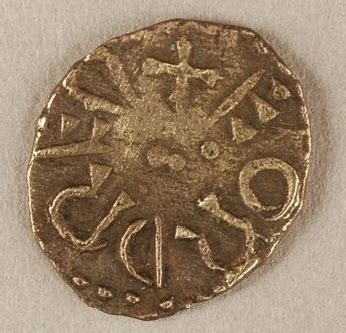
wergild was originally
payment made in gold coin
We were delighted that, without prior notice, a visitor from Oxford Unitarians joined us for this gathering.  And although, as it turns out, there were no children with us, should any have come, they would have been invited to show us their colouring-in of pictures of Ganesha in all his elephant-headed and pot-bellied glory.


As a last point, as nearby in Bournemouth this weekend was the gay pride celebration "Bourne Free", we decked the entrance to the Meeting House in the rainbow flag of Pride.


20 June 2019

What is #Unitarian Christianity?


Within the broad sweep of Unitarian chapels, fellowships and congregations today there are some that proudly uphold the liberal Christian tradition - from which many other Unitarian strands of thought have sprung in the last eighty years.  So whilst the scope of Unitarianism in UK did broaden in the 20th century, the baby has most decidedly not been thrown out with the bathwater.

So what is Unitarian Christianity, as understood today in UK?  The following is an extract of a sermon by Douglas Reynolds to Unitarian congregations of Kidderminster and Dudley in 2017 and 2018, respectively.
I'm grateful to the Unitarian Christian Association for making this available.  For more on UCA, see the link here  http://www.ukunitarians.org.uk/christian/


"...We see from these points of differentiation that there is a distinct Unitarian form of Christianity.  It is a Christianity that sets aside the doctrine of the Trinity, experiences God as indwelling the human, is Pelagian in that it affirms the fundamental goodness of humanity, and exhorts good deeds, not creeds.

"It is universalist, as it affirms salvation for all.  Like Christianity in general, it originated in the teachings, ministry and ethics of the historical Jesus.  It values the relationship between Jesus and God, and his faithfulness unto death.  The phenomenon of the Resurrection is left to the individual to interpret according to one's understanding of the event. 

"It also takes on board the religious insights of the evangelists, the Apostle Paul and the authors of the other documents of the New Testament, together with insights given in the Old Testament, but at the same time, it is freed from the shackles of discarded dogma.  It remains open to reason, science, the individual conscience and the insights of other faiths, and that of religious humanism."

Douglas Reynolds