Showing posts with label narrative. Show all posts

13 May 2020

In the beginning was the doing and the doing became the Word - how to say "I believe" as part of conversation

“I believe…”
      I’m going to ask you to bear with me.  There are going to be times you want to jump in and point out things that are problematic, things you don’t agree with, things that need rounding off or balancing out.  Don’t do it.  I won’t take your silence for agreement and I ask you to not take any of mine for deliberate avoidance or ‘tacit denial’.  I’m going to advance a position today that suggests that what we say takes its meaning from the conversation we are having, and that that conversation is framed within the community, culture, and ‘way of life’ we find ourselves in.  This isn’t my idea, so I am not going to build it up from the foundations.  If you fancy checking it out in detail give Wittgenstein’s Philosophical Investigations a look. 
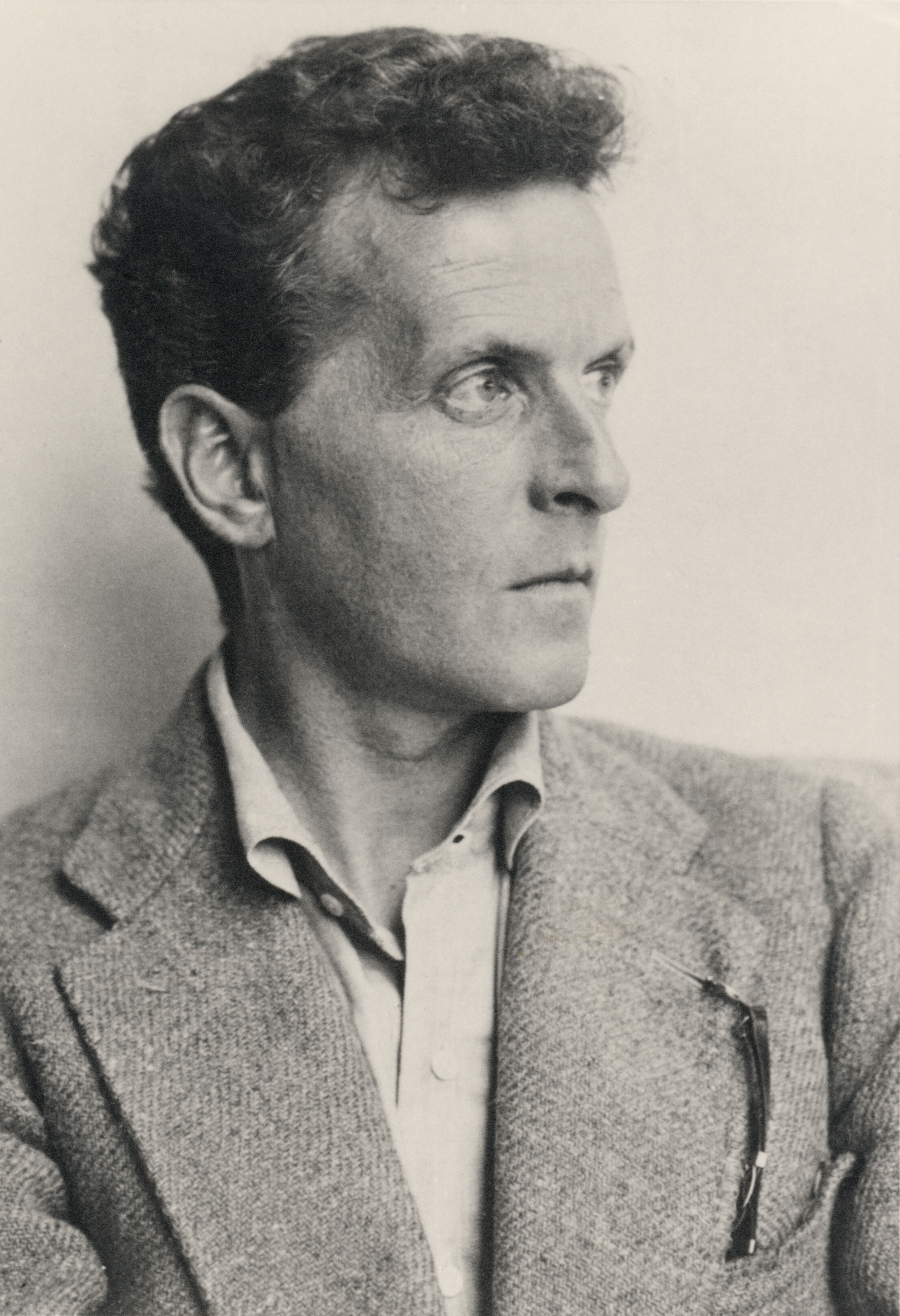
Ludwig Wittgenstein, 1930
The meaning I am looking for today is what we mean when we talk about our beliefs, how we understand what is said when we say “I believe…” or, I guess more often today, when we say “I don’t believe…”.
These kinds of statements, even when made in private, always have an audience, either actually there or imagined.  First off, we are saying them in a language that we have learned from others and use within a community.  
We don’t get to decide what a word means or how a language works, no matter how much we can push the boundaries of it. The more we nudge words outside their usual use the less likely our audience will understand what we mean, and the harder time we will have being sure we know what we mean ourselves.  Sound extreme?  Ask yourself how clear you are on something when you can’t share it with anyone else.  If you find yourself unable to describe it, explain it, or even show it, then you are going to have some doubts about it. 

      I spoke about nudging ‘words outside their usual use’.  We don’t learn language by understanding what one word means using a series of others.  We would never be able to begin, if that was how language worked.  We don’t learn language by clearly setting out and agreeing on terms up front; we need to already have language to be able to do that.  Rather, we learn language by doing things.  We learn to sit in chairs, to pass the sugar, to find the bathroom; and the more we do things with others the more our language grows, and the more complicated the things we do as a group, the more complicated our language becomes.  This starts right from our first words and carries on throughout our lives.  We’ve all started a new job and felt a bit lost till we were in on the buzzwords and shortenings; we’ve all taken up a hobby and at first felt bewildered by the array of new terms and phrases.  Those of us who have lived abroad and learnt a new language will recall how we moved from translating every foreign word back into a word from our mother tongue, and finally came to a place we could say and think and even feel things in the new language that we were unable to quite express in our first one. 

This fascinating book says a lot more
about how languages don't exactly match.
I’ve dwelt on this longer than I intended, but it is important because when we say “I believe...” we are saying it not just in our mother tongue, we are saying it in a certain ‘work’ or ‘hobby’ environment too.  We are saying it in the context of doing something together, simple or very complex: we are saying it in the context of doing something.  If what I am doing and what you are doing are not the same, if I am talking in terms of one environment and you in terms of another, then we may as well be talking two different languages.


      When we say “I believe…” we are conversing within a community and we are trying to do something specific within that conversation.  When we fail to acknowledge that community and to accept what is being aimed at we cut ourselves off from conversation and can only enter into conflict.  At the heart of that conflict is the need to impose on the other what we understand by the words they are using, and that need is driven by the deep desire to understand ourselves.  Socrates, in Plato’s dialogue Alcibiades I, speaks of how we see ourselves in the mirror that is the eyes of others.  Well: imposing what we want words to mean is rather like painting over that mirror with the portrait we’d like to see.  When we succeed in doing it, we harm the other and lose sight of ourselves as well.
"The Portrait of Dorian Gray" by Oscar Wilde
      If we are going to have fruitful conversations around what we believe — and even more so if we are going to build fruitful communities around what we believe — we need to learn to look into the eyes of others.  We need to realise that belief is something that isn’t about the sound of words or how we try to draw out the concepts; it’s about how we live.
In the Bible, ‘truth’ is something that is done not just said; knowing is about relationships, not just being right and being able to explain why.  I bring up the Bible here, not to rely on its authority, but because it relays thousands of years of human religious experience and because it is central to the community and culture in which many of us, myself most certainly, talk about our beliefs.  Whether we say “I believe …” or “I don’t believe …” we, here in the West, are talking in the shadow of that dominant narrative.  Our communities have splintered into smaller communities each with their own divergent stance to that narrative, but it is there for the Atheist Humanist, the Pagan Revivalist, and the Cultural Agnostic, as much as for the Roman Catholic, Protestant, or Non-Conformist.

       Acknowledging the role of language, and its reliance on communities and what we are trying to do at any given time, might sound like it is making saying “I believe...” difficult, like it’s making the conversation around that nigh-on impossible, but it isn’t.  All our language is rooted in the experiences we share, the things we can and can’t do, the world we live in as ourselves, the things we can’t change that set the stage for the things we can.  Language works, for all its nuance and contextuality, because language is how we live in a world we share.  We can say “I believe…” because of that shared world, that shared experience, that shared interplay of what we can and can’t change. 
If we put in the work to understand the conversation that is being had when we say “I believe …”, if we can hold back with pushing what we think ‘should’ be meant with the words, if we can actually engage with what is trying to be done in that moment, then we can begin to grow together and in looking into another’s eyes we can begin to see ourselves better too. 

      Belief is never purely intellectual: it is about how we live our lives, why we make our choices.  I hope we can explore that together, I hope we can share that together, and I know that if we do together, we’ll find that our language will bring us eventually more together, however much it may hold us apart for now. 


16 August 2019

#Unitarians encouraged to challenge and speak out during a heart-warming gathering in Ringwood

On 11th August we gathered as Unitarians and friends in the Meeting House in Ringwood, built in 1727, as we usually do on the second Sunday of each month.

Unitarians together in 2014 - in a setting similar to our gatherings
As we don’t have a Minister, all our services are led by one of us, who takes the lead without having had any special training.  We have found it very helpful to adopt a framework for our gatherings that originated at the Kensington congregation, and it is known as the “heart & soul” style service.

There’s a format provided - and with about an hour’s preparation, searching on the www for suitable prayers and words, and some more time with our green hymn book, finding hymns that we can sing because we know them, our leaders manage to curate very satisfactory experiences when we meet.  There’s an emphasis on collaborative engagement and participation to make the gathering work, so the format works well for small congregations that don’t have Ministers.

The theme on Sunday was the presenting of Unitarianism as the challenging of the accepted narrative and the daring to speak out when that narrative is found wanting.

The research by our president for the day had brought to light the story of St Oran, who was a follower of St Columba.  Oran had volunteered to be buried alive under the foundations of a new church being built by Columba, because it seemed that some form of sacrifice was required to stabilise the ground (the new building kept tumbling down while under construction).  But for some reason - perhaps this sacrifice was too much for Columba’s conscience - some days later, Columba ordered that Oran should be uncovered again.  And when he was uncovered, Oran shocked everyone by speaking, saying that there is no such great wonder in death, and that the descriptions of Heaven and Hell did not measure up.  He finished with a whisper to Columba, “The way you think it is may not be the way it is at all.”  At which point, Columba backtracked yet again and ordered Oran to be re-buried.  There’s still a saying in the Gaelic-speaking world which is used to silence uncomfortable subjects of conversation: “Throw mud in the mouth of St Oran.”

The children’s story that was read as the second reading was The Emperor’s New Clothes by Hans Christian Anderson.


The words of our second hymn included the words, “From honest doubt we shall not flee / Nor fetter the inquiring mind / For where the hearts of all are free / A truer faith we there shall find,” written by John Andrew Storey.

We had a secondary emphasis in our gathering of being committed to each other in community.  This was developed through a combination of music and words.  The music included our first hymn, which said, “ O let us live with humankind / As sisters, brothers, true / We’ll share our joys, our sorrows share / Becoming as we do,” written by Doris Jeanine Stevens. And there was a wonderfully relevant musical interlude in the form of a song by Ben Platt https://www.youtube.com/watch?v=aDeNQNtW1f8  Grow As We Go

On the same theme of growing and committing in community, and sourced from the www, were the opening words from Rev Dr Linda Hart and chalice lighting words from Rev David Usher.

Everyone is welcome for the next gathering, which is on 8th September at 10 a.m.


(Early notice: there will be no gathering in November).

17 December 2018

What happened at the Blue Christmas #Unitarian service at Ringwood for those who have a heavy heart at Christmastide


The Blue Christmas service on 16 December was a departure for both Ringwood town and the Unitarians who meet in Ringwood.

Prior to the event the people we asked thought that holding a service for those for whom Christmas is a hard time was a very good idea.  And so it turned out.  People came to the service who had not been to one of the regular monthly services, and among them were people who - it turns out - are suffering under some considerable strain at present.

The service began with a quiet time in which, in general terms, we were reminded the sorts of reasons why Christmas can be a painful season.  And then the narrative of the Christmas story was unfolded, interspersed with musical interludes.

Each of the readings had been chosen to be an unconventional perspective on the stages of the nativity.  A poem Bethlehem by Frances Thompson gave the perspective of the innkeeper’s wife, focused on caring for the young mother in the face of a very male world.  T. S. Eliot’s speculative poem, from the view from one of the wise men (The Journey of the Magi) suggested that death as well as birth was intrinsic to Christmas.

Unitarians are not certain about Jesus in the way that other churches are, and so space was left for participants to consider their own view of Jesus.  But the message of hope for renewal, signified by the birth of this baby, and indeed every human baby, and the possibility that Christmas is about reconciliation of difficulties, were explored.

Having cleared our minds we were invited to some minutes of silence, in the trust that in the silence the messages we most needed to hear would be born in us.

In amongst the more unusual pieces of Christmas music that we heard, we did sing one traditional carol: It came upon the midnight clear whose lyrics were written by Edmund Sears in 1849, who was pastor to the Unitarian Church in Wayland, Massachusetts at the time.

https://en.wikipedia.org/wiki/It_Came_Upon_the_Midnight_Clear


We closed with an unusual piece of music for a Christmas service, which was a song by Paul McCartney, which includes the hopeful lines:  “One of these days, when my feet are on the ground, I’m gonna look around and see, See what’s right, see what’s there, And breathe fresh air ever after.  It’s there, it’s round, it’s to be found, by you, by me: It’s all we ever wanted to be.”


11 April 2018

A safe personal space for expression of deep experiences and ideas - Ringwood #Unitarians give the floor to a newcomer in April 2018


The gathering on 8th April was given as an opportunity for one of our newer participants to lead on a topic of her choosing.  When someone has shown an interest and has participated with us we feel it is right to extend that invitation, in the Unitarian ethos of spiritual exploration in the setting of a community. We make the invitation knowing that this may be the only safe space someone has experienced in which they can speak. 

A community setting intrinsically requires acknowledgement that each is on their own journey and that those journeys weave together in a narrative, a dialogue, a time for speaking and a time for listening, as well as a time for reflection, integration and - of course - rejection of ideas.  We are always grateful when someone takes the personal risk necessary to speak out, but we are under no obligation to agree with what they say.   And because we differ, it is quite likely that what one finds to be “the answer” means very little in the context of another’s life.  The responsibility, as in any conversation, lies with both speaker and listeners, to make what they will of what is being said on that day. 

On Sunday, it became clear that our speaker has the sense, after some journeying, that she has arrived at a waypoint.  She has marked that waypoint by collecting together her findings and the guidance she has received – in a website, as it happens – and it was from that store that she spoke at our gathering.

In a move unusual for our meetings, the speaker set aside the published framework for our gatherings.  In case you are wondering, groups meeting under the Unitarian umbrella are at liberty to set their own format and content, so it is not unknown for some fairly innovative forms of gathering to emerge, depending on which congregation you come across.  Generally, though, if you come to a meeting of Didymus (Unitarians in Ringwood), you can get an idea beforehand of what to expect by looking at the tab “What we do when we meet" on this blog.


17 November 2016

November 2016 meeting for reverence turns into a commentary on a key world event #unitarians

Our service leaders are nothing if not adaptable!

This month our president for the day, for 13th November, had been planning to dwell on an ethics of identity.  So in the light of the announcement on 9th November of the name of the President-Elect, who in January 2017 will become 45th President of the United States of America, our leader adapted our service, whilst holding to the topic “Who do they say I am?”

In the light of the news, in a gathering that focused on who we say others are, and what narratives we allow to be built up around us, which can lead to persecution and hardship for others, we contemplated the documentary references below.  What do we allow to be said about others?  Do we challenge stereotypes and falsehoods?

We were glad to welcome four new faces on Sunday, some of whom we hope to see again at another of our meetings for reverence.


The Bible, Good News Translation
Mark Chapter 8


27  Then Jesus and his disciples went away to the villages near Caesarea Philippi. On the way he asked them, "Tell me, who do people say I am?"
28  "Some say that you are John the Baptist," they answered; "others say that you are Elijah, while others say that you are one of the prophets." 
29  "What about you?" he asked them. "Who do you say I am?" Peter answered, "You are the Messiah." 
30  Then Jesus ordered them, "Do not tell anyone about me." 
31  Then Jesus began to teach his disciples: "The Son of Man must suffer much and be rejected by the elders, the chief priests, and the teachers of the Law. He will be put to death, but three days later he will rise to life." 
32  He made this very clear to them. So Peter took him aside and began to rebuke him. 
33  But Jesus turned around, looked at his disciples, and rebuked Peter. "Get away from me, Satan," he said. "Your thoughts don't come from God but from human nature!" 


The Apology by Plato (Socrates’ apology to the men of Athens, as recorded by Plato)
<a href="http://worldartsme.com/">WorldArtsMe</a>


“So let us take up from the beginning what the accusation is, from which has arisen the slander against me. ..... What did the slanderers say to slander me? Their sworn statement, just as though they were accusers, must be read: “Socrates does injustice and is meddlesome, by investigating the things under the earth and the heavenly things, and by making the weaker speech the stronger, and by teaching others these same things.” ... ...You yourselves also used to see these things in the comedy of Aristophanes: a certain Socrates was carried around there, claiming that he was treading on air and spouting much other drivel about which I have no expertise, either much or little. And I do not say this to dishonour this sort of knowledge, if anyone is wise in such things; but in fact I, men of Athens, have no share in these things.”

18 December 2015

December meeting for reverence

Our meeting on 13 December was led by Lewis Connolly who came from quite a distance to be with us.  It was lovely to meet him and his wife, who played the keyboard for us so that we were able to sing together.

Lewis picked a theme around authenticity and the yearning for real meaning in life.  He took a reading from J.D. Salinger’s Catcher in the Rye and spoke aloud his insights centred on that novel.  In his homily Lewis said,

“Pictures and film of what’s “really happening” stream into our homes twenty-four hours a day. And yet this hyper-reality ... plays into a false narrative which perpetually keeps us sedated in an illusion of the unreal ... as we orientate ourselves in favour or against ... narrowly defined narratives of convenience... of good versus evil. But when we strip away these illusions of allegiance, which we so often define ourselves by, the sheer weight of our isolated aloneness becomes all the more apparent.”

When punctuated by the singing of “We shall not be moved”, among other things, it made for a very moving meeting and the conversation carried on over refreshments afterwards.

You can read Lewis’ whole text on his blog at his website http://www.lewisconnolly.com/blog/2015/12/6/searching-in-the-rye


04 February 2015

Multi-lingual Unitarians


Consider these phrases:

In the struggle, there lies our growth
In the struggle, there lies our humanity
In the struggle, there lies our wholeness
In the struggle, there lies our despair
In the struggle, there lies our hope
In the struggle, there lies our salvation
In the struggle, there lies our learning
In the struggle, there lies our achievement
In the struggle, there lies our failure
In the struggle, there lies our loneliness
In the struggle, there lies companionship
In the struggle, there lies Tao
In the struggle, there lies a glimpse of entirety
In the struggle, there lies our emptiness
In the struggle, there lies All That Is
In the struggle, there lies our Saviour

Any or all of these phrases might be used to describe the same process and experience but from different perspectives.  Any or all of them might also be substituted by one or other of the hallowed names that people use for ‘God’.

Unitarians are religious liberals used to hearing many different words and using them without fear.  We are the religious translators of many different experiences, bringing them all together into the narrative of one community.

When you come to one of our meetings for reverence and worship, bring your own language with you, and respect that of other people, and you will feel right at home.