Showing posts with label action. Show all posts

06 December 2022

What does 'being Church' mean? How does that seem to #Unitarians? - Ringwood Unitarians' gathering 11 November 2022

Our gathering in November was nearly cancelled but we are glad that it went ahead despite a very low turn out.  Because this was a very important gathering, asking big and important questions about what Church means to us.  What does ‘being Church’ mean?  What does ‘Church in action’ look like?  Why do those of us who gather find it necessary to gather?  Why don’t we simply carry on with our spiritual journeys, each a pilgrim on their own?

The gathering was really an enquiry about what 'being Church' is, or could be, for Unitarians.


The memorial board for the fallen from the
previous Unitarian congregation at the Meeting House


It being Remembrance Sunday, the candle in the chalice was lit to words adapted from For the Fallen by Robert Laurence Binyon (1869-1943).  And then, as usual, we were invited to privately take stock of the recent days and weeks and to be honest about how we well we had been living up to what is most important to us.  Later on in the gathering, after the readings and reflection on them, we lit candles to share our joys and concerns, and heard words of hope and blessing.


Our blog habitually devotes more space to the readings we hear in a gathering, and the reflection on the readings, merely because words can easily be brought across into the blog.  It is not possible to bring across into a blog the experience we have when we use prayer words together, light candles together, sit in silence together, or the feeling of singing together.  You will only truly get the flavour and feel of our gatherings by coming along to one.  So please do, when you are able.


We heard two stories made famous through the teachings of Jesus, namely “The Good Samaritan” from the book of Luke in the Christian Bible (Chapter 10 verses 30-35), and “The Prodigal Son” also from the book of Luke (chapter 15 verses 11-32).


For those unfamiliar, “The Good Samaritan” is a story in which a traveller gets mugged on the road from Jericho to Jerusalem, is ignored in his danger by upstanding members of society, yet is made safe and helped to get better by someone whom Jesus’ audience would have considered outcast.  And the story of “The Prodigal Son” tells of a younger son in a family, who is granted his share of the inheritance, then leaves to go abroad and wastes it all, and eventually goes back where he came from, with his tail between his legs.  Whilst his father makes him welcome, his elder brother is very grudging and resentful. The father attempts a reconciliation between them.


Before going any further, it is necessary to make clear there are (at least) two different inferences in the word ‘Unitarian’.  To be a Unitarian can, as well as other things, mean that (1) you experience or claim or guess that the divine nature is necessarily a “one-ness”, as contrasted with the “multiplicity” of the Hindus and Pagans, or “three-ness/Trinity” as traditional Christians maintain and/or (2) no matter what you experience or claim or guess about the divine nature, you have some form of allegiance to or participation in the movement that calls itself the Unitarian Church in the UK.  The first is a statement about belief.  The second is about involvement in a group or body of people.


(library image)


Like many other religious affiliations, labels about us are messy.  People need wriggle room.  Things are not clear, even privately to each one of us, and less so when in community.


What follows are the reflections on the readings, from the person presiding on the day.


~~~~~~~~~~


Unitarians in the UK have a mixed lineage. The congregations we know today have varied histories and were born out of differing Christian traditions.  While it is not hard to find Unitarian people throughout recorded history, and indeed one could argue right back into the Bible, the actual Unitarian congregations we have today are reconfigured from reformed churches (for more explanation of reformed churches, see Wikipedia https://en.wikipedia.org/wiki/Calvinism). 

To some now (and, I am sure, it has always been the case), what matters is the personal journey, the search for truth and the striving to live accordingly.  It is no surprise, then, that in both our readings the journey features strongly.  The road from Jericho to Jerusalem on which the journeyman was waylaid.  The road back from foreign lands to the father’s house.  The spiritual path is one that none can tread for us and one that is rarely strewn with palm leaves. 

But while each of us has a private, personal spiritual path or journey, we in Ringwood suggest that what distinguishes a Unitarian from a solitary pilgrim is someone valuing the experience of Church, of gathering, of being part of something; part of a bigger journey that gives a context for our own journey too.  

Without a coming together there would be no congregations, Unitarian or otherwise.  And that would mean there would be no place for those on their personal journeys to rest or find impetus to go further or change direction.  We who gather, often or occasionally, clearly see something of value in our congregations and in our wider movement.


In our first reading we encounter the journeyman in a bad way.  The road has been unkind; and far from making their way onwards autonomously they are in pain and in need.  We will all be in that position at some point, now and again.  Perhaps we will have seen things we cannot accept, or will have done things we cannot undo.  Perhaps we will have led astray people whom we care about; or perhaps we will have been oppressed by questions we cannot approach.  Life is tough, and our journeys through it have their dark places and blind corners, just like that road from Jericho. 

I don’t think it is by chance that the first two people who come along are church people; first, the equivalent of the Minister or Preacher, and second, the Music Organiser or Pulpit Rota Lead. These are good people, people needed in the making and sustaining of a congregation but, in this tale, they are busy on their own personal journeys.  They are visible and essential parts of a congregation, but in this story they do not demonstrate the characteristics of Church.  The story tells us they passed by on the other side.  And so we can see: we can have roles in a congregation, but yet be isolated individuals on private journeys, without being Church. The first reading, and my own heart, suggest this is not enough.


The third person comes along, and you need to picture this person as someone in your congregation who outwardly values very different things in congregation from what you value.  If you like silence, they’ll be the one who wants to discuss everything.  If you like energetic interactive gatherings, they’ll be the one who wants to stick to a sermon and song.  Whichever hymn book you like, they’ll love the other one.  You often find yourself wondering why you and they are in the same congregation at all.

This is also the person who doesn’t pass by on the other side. 

This is the person who puts you onto their own horse or donkey, the person who is aligned with you enough, who cares enough, to share with you what has helped them along the way. 

This is the person who takes the time to pay attention to your hurt and to do what they can to help you heal.

And this is the person, whose support of the wider congregation firstly allows you the space and time you need to heal, and which secondly allows you both to continue on your personal journeys at your own pace and in your own ways.

Our first reading doesn’t denigrate the vital structural roles and responsibilities in our congregations, but it does suggest to us what Church looks like in action.


In the second reading I see a suggestion for why we come together, not just what coming together could look like. 

I was wary of this second reading.  For myself, it is one that comes with weighty layers of imposed meaning, and that might be the same for some others too.  Bear with me.

I remember discussing this reading with some young monks many years ago.  One of them heatedly, and bravely, confessed that he understood the grudging resentment of the elder brother.  That he, too, sometimes felt frustration and injustice that others could come along and enjoy all the good bits of congregational life, whilst not putting in all the hard work and sacrifice that he had. 

It would be easy here to look, once again, at those with clear roles in a congregation  — or even those who just turned up gathering after gathering — and say that doing those things alone isn’t enough to make a Church.  There is no congregation without these people and, like for that young monk, the frustration of the elder son is always a risk on their personal journeys.  But that is not what I take from this second reading.

It is not what divides the older and the younger son that interests me.  It is the words of the father who would bring them together:

‘Son, you are always with me, and all that is mine is yours.  But we had to celebrate and rejoice, because this brother of yours was dead and has come to life; he was lost and has been found.’

What can unite us, what has the prospect of bringing us together, is celebration; celebration of rising again every time we fall; celebration of finding a new way every time we hit a dead end. 

We come together to celebrate our personal journeys, united in hope for our way ahead.


I value the personal journey.

I value the camaraderie of the road.

I value those who give their time, their labour, and their resources to provide a place to rest and heal.

And I value the celebration of all of that.  I value the gathering together to sing into the darkness, to set lights ablaze and tell our tales of hope that we might make them true.

Is this what Church is for Unitarians?  I do not know for certain, but I hope there is something in this that you can value too.

A mixed group of Unitarians, some years ago.


30 December 2019

The #Unitarian movement - unlike other churches when it comes to the “why”


I have been reflecting on the podcast here, https://theministryofchange.org/podcast/2019/11/9/liz-slade-spirituality-community-and-collective-wellbeing    which is an interview with the Chief Officer of the UK Unitarian movement, Liz Slade.  There is a transcript of the interview available at the same link, if you prefer.

Liz speaks about some of the things that have been traditionally found within religions and Churches, things that remain essential with respect to human wellbeing but which need to be transferred out of religious formats that people are now not very interested in, and transferred into formats that  are more accessible and more meaningful today.

Yet Liz suggests that despite its limitations, the language of religion can still convey nuances that are more connective and more profound than purely civic language, or evidence-based language.  That, therefore, we should not throw the baby out with the bathwater.  Personally I would extrapolate this comment of hers from referring to the language of religion to also include some of the forms of religion.  That is because I consider that religious conversation and dialogue cannot be purely word-based; actions and silences contribute so much to human wellbeing.

But Liz’s words speak for themselves; it was a follow-on thought I had, which I wanted to write about.

Today’s Unitarian movement would, if you let it, be reasonably directive of the “what” of religion, much like other religions and Churches; but it then shifts back a gear to making suggestions, only, about the “how” of religion; and as for the “why” of religion, once one gets beyond the blindingly trite answer that it seems to people to help them in some way, the Unitarian movement begins to look distinctly evasive.  


Certainly, if you participate in dialogue in Unitarian settings you will be exposed to core or key teachings of many world religions. And thoughts from other spheres of human thought, such as the arts, philosophy, and science, are also given prominence.  But in no sense are any of these brought forward as anything other than food for thought, and vehicles for dialogue. 

I think there is much crossover between the Unitarian movement and other traditions about the “what” of religion.  I suggest that the “what” of religion that Unitarians would recognise is about ‘making change within yourself through relatedness to what lies external to yourself.’ The “what” of religion is, perhaps, swinging as a pendulum between the pole of self-examination combined with revision of intent and practice, and the pole of co-acting in the world for the betterment of the whole.  About taking responsibility not only for yourself but for what lies beyond yourself, and about being receptive to feedback of all sorts as you co-act in the world out there.  The Unitarian movement lays a heavy emphasis on co-creation, on action as well as conversation, on - as Liz Slade puts it - getting rid in oneself of any consumerist attitude one might be tempted to adopt in taking part in church activities.  Unitarians would be pretty firm that religion is not something one can do on one’s own.  Admittedly, the language around such solitary activity is not well developed; but unless something which is going on interiorly has some exterior connection, it probably isn’t of much relevance, anyway.


The “how” of religion is more nebulously dealt with.  Unitarians and their churches have evolved slowly rather than being part of disruptive change and so many of the forms that are suggested or adopted show their heritage as a continuation of practice in place for hundreds of years.  So the “how” of religion gatherings tend to adopt features such as hearing readings; singing songs; holding periods of silence; listening to an individual person’s perspective on their own researches, reflections or experiences.  There is, increasingly, recognition for the need to co-create during gatherings and for all contributions, in all manners, to be respected as essential components if a  gathering is to be worthwhile.  Nationally, there are opportunities designed to support group and individual exploration, and at the congregational level there is much encouragement to proceed with personal exploration in between gatherings, so there can be news to be shared about those explorations, when next a gathering takes place.  

But whilst regular, reflective gatherings of Unitarians are necessary if there is to be an expression of the wholeness of our humanity, such gatherings are not sufficient. There is also the need for connective co-creation over a broader front.  As in any traditional religion, there is a great emphasis towards acting together for causes that are external to the movement.  There are groupings and associations within the movement that explicitly aim at wider social justice action.  Congregations are self-governing so any social action that is agreed by that congregation can be undertaken. And the breadth of individual actions that aim beyond personal advantage are always celebrated.  The need to balance reflection and action is probably the most directive Unitarian guidance on the “how” of religion.


But the “why” is much less clear.  Ask for the nuts-and-bolts “why” of traditional religions and you may get quite concrete answers: “Because only by doing this will you break out of the unending wheel of lifetimes and find the clarity and awareness that is at the heart of the universe.”  “Because taking these actions will appease the goddesses, gods and spirits that wield control over all that happens to us.”  “Because these instructions for life have been handed down directly from God to his prophets and from them to us so it is meet for us, right for us and even incumbent upon us to follow these instructions, for the sake of God’s love, justice and mercy.”  “Because God showed his love for us by bringing into the world his son Jesus, who then has paid the price for all time of all our misdoings, and it is our duty and our joy to exercise our free will in line with God’s will.”


But there is no one, clear, articulated, root, at bottom reason that is ever given by the Unitarian movement.  That doesn’t mean that there is no “why” for Unitarians personally.  It means there is one “why” each.  And the movement as a body witnesses to the fact that there are as many motivations and root reasons for the “why” of religion as there are people to experience them.  Although other, traditional religions also recognise the multiplicity of standpoints held by their adherents, they nonetheless attempt to find a broadly acceptable formula to anchor their membership, with varying degrees of success.  But if you ask the Unitarian movement for the “why” of religion, you will probably receive a response in the form of another question: ‘well, what is the “why” for you?’


The curious consideration this may lead us to is this: would a “why” of religion be more powerful if - in a compromised and slightly diluted fashion - it were approximately held by a large number of people, sometimes feeling uncomfortable with elements of it; or if, in a 100%, unadulterated way, it cut through to the quick, to the very heart, of one single private person, driving their entire being? 

20 March 2018

The #Unitarian demand for personal responsibility in matters of spirit requires maturity - the Ringwood gathering in March 2018 looked at Letting Go


Familiar faces were gathered there together on 11th March when we met to focus on the topic of “When I was a Child” – Letting Go.


We are vulnerable when young, when inexperienced, and in many other circumstances when we are reliant on the guidance and words from others, rather than on what we have found for ourselves.


We each have a ragged journey towards maturity.  We progress slower in some aspects than in others, and it is common for us to go to our graves immature in some way or other, with friends posthumously describing us as having had an incurable blind spot (or two) that were part of our unique charm.

For the most part we aim to become adult across the broad sweep of human activity, and to keep growing up throughout our life, but we forget that some ideas or rules that we take for granted are those we inherited as a child.  Unexamined, these can cause problems instead.

It is particularly important that we mature in our spiritual life, which is to say in those values and beliefs that, though hidden, drive our deepest and most instinctive behaviour. 

Instructions meant to help us in our early years need to be let go when we have moved on from the help they can give.  The choice and challenge are our own.  We have to take responsibility for our own becoming, our own knowing, our own doing, and our own relating to the world.
If we don’t let leftover, irrelevant knowings diffuse away, or transform into something more appropriate, we are the authors of our own continued knottedness.  It’s not always easy to do, especially since – inevitably – those instructions were given to us when young by people whose authority we trusted, often within the family or placeholders for family.

The readings we heard were by the apostle Paul (1 Corinthians 13), William Shakespeare (Romeo & Juliet, Act 2 Scene 2) and Dennis Lee/Jim Henson/Terry Jones (Sarah’s closing speech from the film Labyrinth).  We also enjoyed learning some new chants, some trickier than others.


Through dangers untold and hardships unnumbered,
I have fought my way here
To the castle beyond the Goblin City,
To take back the child that you have stolen,
For my will is as strong as yours,
And my kingdom is as great.
You have no power over me.


26 January 2018

Helping Ringwood to remember - Ringwood Unitarians and Ringwood Meeting House Association hosting a vigil for International Holocaust Memorial Day 27th January 2018 #hmd2018 #unitarians @RingwoodMH


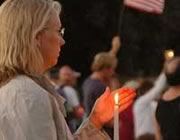
Tomorrow, Saturday 27 January 2018, Ringwood Unitarians and the Meeting House Association welcome all who wish to spend some time quietly remembering International Holocaust Memorial Day.  The Meeting House doors will be open from 3 p.m. to 6 p.m. for people to come in and sit silently, light a candle, read some literature, learn about genocide events and how genocides slide into happening, and if desired, sign a visitors' book.

International Holocaust Memorial Day aims to keep alive in memory the shocking truth of the Holocaust during the Second World War, as well as more recent genocides across the world.  What we do not learn from our history we are destined to repeat.

26 February 2016

2016 Festival of Unitarians in the South East (FUSE)


One of our group went to FUSE, a weekend Unitarian festival in Worthing, held each February for the past eight or so years.  This is what she said about it.


"It was a wonderful experience.  This was the first time I had been to FUSE.  Because it has no element of 'annual general meetings' or other administration, I could just enjoy the activities on offer, and get on with soaking up the atmosphere of being - for the first time in many years - in a large group of Unitarians all together.  The hotel had 90 or so rooms, and I don't know how many were being occupied by Unitarians on their own, or as pairs, or as families, but there were enough of us to fill their huge dining room and make a quite a din at meal times.

For me, it was a very prayerful time; but not all Unitarians like the word "prayer" or attach a meaning to it.  You see, not all Unitarians think in terms of God or even religion.  Some think in terms of the highest human values, the complexities of the human spirit, the common features of life as we directly experience it.  Others are more aligned to thinking about life as part of how God can be experienced in the world.  That didn't stop us all enjoying together the singing, the walking, the meditation and mindfulness, the Qi Gong, the spiritual elements that can in some way be called sacred, the encouragement of children to find their own spiritual path ... or any of the other activities that were laid on.  There were some very talented workshop leaders there, who with the management team, made it all happen.  And just outside there was the promenade along the beach, empty in February and with some tremendous waves crashing on the pebbles.  Spectacular!

When you soak yourself in a new atmosphere that is bursting with enthusiasm like that, especially over a whole weekend, it is a very intense experience and it does funny things to your thinking.  I chose to stop using any electronic gadgets, even the TV in my room. Whenever I was between scheduled activities I simply went back to my room and just sat, and looked, and waited.  I don't know what I was waiting for, but something definitely did emerge for me, in the quiet.

I can't wait to go back next year.

And I would like to thank the Southern Unitarian Association who generously gave me a grant towards my costs.  I'd like to think that one of the other Ringwood Unitarians might be able to take up a grant from SUA for 2017 FUSE.  I would hate to keep this experience all for myself."


04 October 2015

Looking for action 2015

We have been reading various posts on social media about how younger people today with a religious outlook firstly won't commit long-term to anything and secondly are looking for signs that churches and religious groups are doing something meaningful to change the world, rather than just voicing their concerns.

When you are a very small group it is hard to discern the actions to take that will make a difference around you.  In Ringwood we think we have spotted one.  We are forming a group of all sorts of people who next January will do something new for Ringwood.  This group will be standing up in the street on a cold winter's day saying that we here in Ringwood remember the millions of people killed in the Holocaust, Nazi Persecution and in subsequent genocides in CambodiaRwandaBosnia, and Darfur.  We honour the survivors of these regimes of hatred and challenge ourselves to use the lessons of their experience to inform our lives today.

27 January marks the liberation of Auschwitz-Birkenau, the largest Nazi death camp, and is now designated as Holocaust Memorial Day.  HMD is a time when we seek to learn the lessons of the past and to recognise that genocide does not just take place on its own.  Genocide is a steady process which can begin if discrimination, racism and hatred are not checked and prevented. We’re fortunate here in the UK; we are not at risk of genocide. However, discrimination has not ended, nor has the use of the language of hatred or exclusion. There is still much to do to create a safer future.

Perhaps the group of people in Ringwood who will stand together on 27 January will succeed only in reminding others about the ghastly possibilities in humanity - let's face it, we won't be able to mend it.  But the biblical story in the book of Genesis - the story of Adam, Eve and the Tree of the Knowledge of Good and Evil - though a legend, reminds us that once you know about right and wrong, it changes everything for you.  We know now about the Holocaust, and others may be reminded about it through us.  So that will change something in the world.

If you want to join us in Ringwood in January email us at lucyunbox.ringwood@btinternet.com

29 July 2015

Unitarians lead children's holidays

It was barely two and a half hours that I spent with Uni-Kids last night but I came back refreshed in spirit, though tired.  Uni-Kids is an annual adventure holiday for children largely from the south of UK, arranged and run by Unitarians.  This year, like last, the holiday is taking place centred on Burley Youth Hostel in the New Forest.  As this is only six miles from Ringwood, the opportunity to go and meet everyone and take part in a few activities was too good to pass up.  I’m not much good at children’s ages, but I would say that there wasn’t anyone over 13 in the group of ten children.
Burley Youth Hostel, New Forest, 28 July 2015


I turned up after dinner at the end of their first full day and heard tales of beach art and canoeing, blisters and getting wet.  Plans for the lido and a fusty museum tomorrow.  I was assigned to the Jumping Jellyfish team for the last two rounds of the evening quiz, which balanced things out a bit as several other teams also included an adult.  A hard fought competition ended in a four way tie-break; victory was underplayed by the children and the disappointment of the losers very slight.  All low key stuff.


Next we wrapped up warm, ready for a dusk walk in the Forest, and before we set out we played the old “Post It note on the forehead” game.  We each had an identity assigned through a picture of a Forest animal and by asking other people questions we had to work out what our animal was – or perhaps, who we were.  Funnily enough, I had seen this game often enough but had never before been a player.  I quickly found how hard it could be to think of fruitful questions to ask about “myself” out of the blue, and how much easier it became once I learnt to look at other “animals” and ask questions about “myself” through reference to other animals’ characteristics (am I stripey? – I asked the “badger”).  Hmm.  Serious learning point for me there, I think.  Can I easily learn about myself in isolation?


A shortish walk in the deepening dusk led us to a clearing where two mature oaks and two beech trees had been felled by some winter storm or other.  The Moon is about three quarters now and she was a beautiful sight above the tree line.  We carried out an exercise in mindfulness, paying full attention to all the noises we could hear.  For me, and for another as it turned out, it was a bit of a struggle to welcome the raucous throb of the tuned-pipe Harley Davidson motorbikes asserting themselves rather unnecessarily as they passed quite close by.  Much easier to welcome the alarm calls of the blackbirds and robins settling down for the night.  We didn’t hear any of the badgers, deer, sheep, donkeys, hedgehogs, squirrels etc that we had been earlier on, but we were able (after completing the mindfulness practice) to catch sight of a small bat.


When we got back to the Youth Hostel we had a reflective session over hot chocolate and biscuits, where we were each invited to say how we were feeling and name it in animal form, how that had changed since yesterday, what we had most enjoyed today and what we were looking forward to the next day.  And what would be tomorrow’s biggest challenge.


I felt like a heron or an ibis, poised, concentrating, watching, learning, picking out nuggets of food.  For I don’t have children of my own and I could recognise the skill it takes to make a learning programme seem like a holiday, or a holiday seem like a learning programme, without slip, without forcing, without pressure, without winners and losers.  I salute all those who carry out work like this to build the health and wholeness of the next generation.


For wholeness was what they were learning.  Working in groups and sharing the tasks and the responsibilities.  Walking quietly with intent, learning to listen.  Practical techniques for de-stressing and reconnection with the body.  Connection with the Earth.  Use of metaphor as a powerful tool of thought.  Listening to each other and self-awareness and self-examination.  A habit of active reflection and closure at the end of the day.  No wonder I felt refreshed as I drove home across the New Forest.


26 July 2015

Holocaust Memorial Day Wednesday 27 January 2016


http://hmd.org.uk/genocides/nazi-persecution

We have started the early planning work to hold a witness event in Ringwood to mark International Holocaust Memorial Day on Wednesday 27th January 2016.  The Assistant Priest at the parish church has agreed to be involved and we hope other churches and the Quakers will, too.  But this will not be a religious event and there are many more groups of people, and individuals, who would want to show their commitment to this event so we will be seeking other participants from all sectors of Ringwood.

11 May 2015

May 2015 meeting


Our meeting for reverence and worship this month had a look at the Buddhist logic for compassion, and led onto some practical actions that we can take to develop our power of compassion.  These include actively responding, inwardly, when we notice the feeling of compassion arising in ourselves; focusing on that feeling and allowing it to develop, and not just ignoring it or fending it off.  Then the Tibetan Buddhist source reading reminded us that there are all sorts of excuses to not outwardly act on our feeling of compassion, but excuses are self-defeating – because one of the best ways to develop ourselves as humans is to work in the world for the well-being of other beings.  We were encouraged to appeal to our inner Buddha-nature, the archetype of the perfect human being within us, by using a little prayer, easy to remember and to repeat during our daily round: “Bless me into usefulness.”

We remembered that it’s not just professionally religious or theological people who teach us about becoming all of a piece with the universe: we heard some words spoken by Albert Einstein about the whole that is the universe, which includes us as parts, lost in our own delusions.  And we listened to a fresh, simple song by Paul McCartney, saying “it’s there, it’s round, it’s to be found in you, in me – it’s all we ever wanted to be.”

We sang two hymns, one about compassion; and the second, which may yet become the anthem for small Unitarian congregations, about how even the tiniest action makes a difference.  We had a period of silent personal practice, and we lit candles and spoke about our concerns and connections. It was good to hold in mind our neighbouring Unitarian congregations at Southampton and Bridport, whom we have visited relatively recently.

In our coffee discussion afterwards we started talking about an additional meeting format we might introduce in 2016.  Something at a different time, when buses are running in the district, and when there are lots of people around – perhaps coming out of work.  With conversation, and candles, and coffee/tea.  Perhaps based on pre-announced topics or perhaps just people bringing their own inspiration on the day.  We would want to hire the Meeting House for this.  We would need a catchy name for it, though – albeit utterly honest, “After Work Candles, Coffee and Conversation” might be just a bit too cumbersome !  We will be thinking about this new initiative over the next few months.

After the meeting we set up a collection point for Christian Aid to boost the Ringwood awareness of Christian Aid Week, and to build on our involvement with the sponsored swim that started on the evening of Saturday 9 May  https://www.justgiving.com/CTIR/   It was good to collect some more donations for this amazing effort organized by Churches Together in Ringwood, which went on right into the small hours of Sunday morning, and by the end was the equivalent of a cross-Channel relay swim.


16 August 2014

Happy and creative holidays 2014

In these summer months, some are in a position to be able to take a break from their usual routine and even go to a different place, for rest, refreshment and recuperation.  We call these breaks “holidays” and this could be spelt “whole-days” for they are a valuable tool in making us whole again.


The gift of becoming whole again after a period of being worn out, of splintering, alienation, tension, stress, and even injury has traditionally been seen as coming from the gods, and there is something in us as humans that feels grateful and even wants to say “thank you” for it.  Even for people to whom the words “god” or “gods” seem meaningless there often remains this sense of gratefulness, though it may be difficult to know to where it could be directed.  Let us just note that this floating gratefulness, which we all sense from time to time, is part of the mystery of being human, and that the word “mystery” originally meant “those things that it is impossible to speak of”.

For those people who can in some way associate a meaning with the word “god” it comes as no surprise to feel “mystery”.  For many people, the word “god” is merely a reverential synonym for the word “mystery”, and they use it to refer to the ultimate mystery, the whatever it is that is the absolute fabric or rule that arches over all the gaps in our knowledge, experience and sensation of living in the universe.

As we muse on the opportunity to take a break, and what it might mean to be grateful for that, let us also remember those who cannot get away from their usual routine.  Especially those for whom the usual routine means violence, oppression, incarceration, violation, lack of shelter, instability, disease, starvation, thirst.

May we in our gratefulness remain open to the humane task of helping where we can, for no other reasons firstly that we are able to do so and secondly that doing so seems very often to be creative and in fulfilment of who we as humans are.

05 July 2014

Being frightened by difference

Unitarians, with people the world over who take a liberal, inclusive, generous view of religious faith and belief, look back and remember Jan Hus on 6 July.  Jan Hus was born around 1369 and he was a  Czech priest, philosopher, reformer and master at Charles University in Prague. After John Wycliffe, the theorist of ecclesiastical Reformation, Hus is considered the first Church reformer, as he lived before Luther, Calvin and Zwingli.

Jan Hus was tortured and executed in 1415 because, as a priest in the Roman Catholic Church, one of the things he did wrong was to offer his congregants both bread and wine, known as “communion in both kinds”.  This mattered to the authorities because in doing so he disobeyed their rules – and they felt that their power and their communities were threatened by his actions.

Jan Hus had read the Bible for himself and had noticed that, at the Last Supper, celebrating the Jewish Passover, Jesus had invited his followers both to take and eat the seder bread and to take and drink the wine, and to continue to do that in his name until he returned in glory.  At Mass, therefore, Jan Hus fed his congregants both bread and wine, in defiance of the Catholic instruction of the time, which was that only the priests should drink the wine at the Mass.

Such things may seem trivial to us but – as Dean Jonathan Swift pointed out in his satire about the big-endians and the small-endians, who fought over which end of a boiled egg should be broken into with a spoon – every culture has its blind spots and taboos, over which the most terrible wars can be fought.  Optional approaches, that come to be seen as “right” or “wrong,” are often bound up in our own sense of who we are and who we include in our tribe.

In remembering Jan Hus and the ultimate price he paid for thinking for himself about religion, and making his stand in witness to what he believed to be right, let us look at ourselves a bit more closely.  What are the arbitrary habits and assumptions that we hold so dear, that are so much part of ourselves and our identity, that we feel frightened when someone does them differently?  How realistic is our fright?  How likely is it, that what is being done will damage our identity or the conditions under which we live our lives?  And how do we express our fear?  Finally, how do we behave towards the person who is doing things differently?

06 May 2014

Unitarians learn to listen in Ringwood

What do we do in our meetings?  Well, we carry out some simple sharing rituals, in which we share silence, candle lighting, and passing small items from hand to hand, and most often, a small amount of food too.  These are all to represent our interconnected nature and may hold extra, private meanings for participants, depending on their personal faith.

We also share the leadership of the meetings.  We make this easy by having a simple but fixed format, which includes space for private contemplation (which may be used for prayer or meditation), listening to music or singing a couple of Unitarian hymns, and most importantly, two readings.  We think of listening to the readings as lectio divina, which means "sacred reading".

Often, lectio divina is a solitary activity, but it can be used very successfully in a small group.  The listening silence that emerges becomes very prayerful, and trust and strong bonds between the participants develop.

Traditionally, the reading activity focuses on scripture.  Scripture is a word whose meaning has changed.  When Paul was writing in the early days of the Common Era, it used to mean anything written down, but more recently the word `scripture` has come to mean the venerated texts from religious writers of various faiths.  Traditional Christians would most often use the Bible, augmented by writings by saints or early Christian mystics.  But as Unitarians we are not constrained by that and a wide range of texts can be used.  Scientific writings can be as important to us as poetry and traditional writings, from whichever faith system has drawn our attention.

As everyone is given the opportunity to select the texts to be read, this arrangement also has the benefit that we can hear the texts and subjects that hold meaning for everyone individually in the group.  So if you are looking for a spiritual community that is interested in your own path and your own belief system, give us a try.  In return, we will give you a good listening to.