Showing posts with label meditation. Show all posts

16 April 2023

The flame of ritual is re-lit for #Unitarians in Ringwood at Easter 2023

Like an empty cross

Stands the lone cold wick.

Like a cold bare tomb

The fire’s grate.

The flame recalled, in hope no doubt,

Rising from the ashes of the light snuffed out.

(Words for lighting the candle in the chalice)


Last Sunday, Easter Sunday, we included physical ritual in our gathering for the first time since the COVID19 pandemic, and it’s a sign that we in Ringwood are at last throwing off the mental shackles associated with the pandemic, and getting back to how we were before it all started.


In a reflective and meditative service, we built on our overall approach to the Gospel — and, in particular, the book attributed to Mark — as ‘shared story’ for personal reflection.  In this service, the ‘shared story’ vehicle for the reflection and meditation was not a Bible reading, but instead a version of the 'Stations of the Cross' meditation, used for hundreds of years in various Christian traditions. 


There were only a few words offered as content, those being the words used at lighting the candle in the chalice, and the words used as the response for the prayer at each station.


Leader: "With compassion we gaze on thy story.

Response: "Because in it we see something of the world."


Rather than being a wordy service, there was much time for personal quiet.  Participants were invited to picture the moment at each station, and let our reflection go where it will.  Recorded chants from the Taizé-style of worship were also played during the ritual.  Traditionally, inside a church building the Stations of the Cross would be carried out by walking to a series of physical locations in the church.  But with all our participants seated in a circle, our president for the day decided to mark each of the fourteen stations by passing a candle round the full circle, hand to hand.


"I have come to feel that [rituals] have another purpose — to end, for a time, our sense of human alienation from nature and from each other…….Rituals have the power to reset the terms of our universe until we find ourselves suddenly and truly at home."

Margot Adler, Drawing Down the Moon


"Any ritual is an opportunity for transformation.  To do ritual, you must be willing to be transformed in some way.  That inner willingness is what makes the ritual come alive and have power.  If you aren’t willing to be changed by the ritual, don’t do it."

Starhawk, Truth or Dare


To this last quote, we would add: if you aren't willing to be changed by the ritual, you are not, in fact, doing the ritual (no matter that it looks like you are).


Stations of the Cross (source: Wikipedia, adapted)


The Stations of the Cross or the Way of the Cross, also known as the Way of Sorrows or the Via Crucis, refers to a series of images depicting Jesus on the day of his crucifixion, and accompanying prayers. 

The Stations of the Cross ritual has existed in one form or another for at least five hundred years.  The earliest use of the word "stations", as applied to the accustomed halting-places along the Via Sacra at Jerusalem, occurs in the narrative of an English pilgrim, William Wey, who visited the Holy Land in the mid-15th century and described pilgrims following the footsteps of Jesus to Golgotha. It has become one of the most popular devotions and the stations can be found in many Western Christian churches, including those in the Roman Catholic, Lutheran, Anglican, and Methodist traditions.

Out of the fourteen traditional Stations of the Cross, only eight have a clear scriptural foundation.  To provide a version of this devotion more closely aligned with the biblical accounts, Pope John Paul II introduced a new form of devotion, called the Scriptural Way of the Cross, on Good Friday 1991. 

13 August 2021

Wholeness is not the same as fullness - emptiness is also needed for becoming - Ringwood Unitarians gathering in August 2021

Still not ready to meet face to face in the prevailing pandemic conditions, in August 2021 we gathered once again on Zoom.  We started our meeting by holding silence, so that we could each do the equivalent of (silently) reciting our personal creed.

The theme of meeting for reverence was ‘wholeness’ in contrast with human brokenness, and it pivoted around some words by the American author Oriah Mountain Dreamer: “When we surrender, when we do not fight with life when she calls upon us, we are lifted, and the strength to do what needs to be done finds us, because we have remembered that we can choose to serve the only cause that matters: life herself.”


We heard readings from Taoism (from the Tao Teh Ching, contrasting emptiness and busy-ness), and Christianity (a story from the Desert Fathers and Mothers on becoming whole enough to see to the heart of things).  We heard that the Buddha’s original message seems to have been cast in positive form – as common sense would expect, his teaching was a call to the ‘more’ of life, not to the ending of it, and certainly not a call to run away from an imperfect world.


We had some prayers and meditations including a meditation by Richard S. Gilbert on a comment by Dåg Hammarskjold regarding our chalice of being (how each day we receive, we carry, we give back).  The reflection had also included an insight on the importance of space and silence if we are to be truly whole, rather than just ‘full’ or occupied.  One participant said, “It made me think of the constellations in the sky.  We think of them as pictures drawn in the stars and yet there is more darkness than light to them.  It is on the space between the stars that we see the shapes form.”


In the self-contained way that has to be used during online gatherings, we sang two hymns from our green hymn books, which focused on the Life that makes all things new and the ‘human becoming’ in oneness and sharing.  After our candles of joys and concerns which turned out to be focused on the darker side of living, it was good to watch a YouTube video in which many sorts of different animals greeted their human companions with what can only be described as hugs.


14 October 2019

Harvest of the land and of our lives - #Unitarian gathering in Ringwood Oct 2019

We gathered on Sunday 13th October 2019 in the Meeting House while the rain fell and the wind blew outside to reflect on The Harvest, of the land and of our lives. The sounds outside and the chill in the air brought something poignant to our first reading's meditation on a ploughed, storm-washed field, after the harvest had been gathered.

"The ridge and round and raise before the Winter rain left bare,
The slow sodden flow of life through all the furrows of the ploughman’s fare...
...
From this fallow field, this field so fair, we do partake the bread of life."


"May their turning be the beauty
of my life’s accomplishment." (by Ceisiwr Serith)
We took account of how, even in the midst of gratitude and celebration for the fruits of labour, there is a preparing for the next cycle of growth and change.  The colourful leaves hanging onto the branches outside, or gusting into the corners, set the scene for the Pagan prayer we took as our second reading. With this, we thought of how our life choices colour our time of fading, and we also turned our minds to the awareness that we too shall come to know the gentle retreat of life in our own golden years.


Our candles of gratitude and our prayers for others were very much informed this week by these meditations. It was good to be together and look upon the fading light of the year with a shared openness to deeper truth.


Traditional Blessing from Carmina Gaedelica


May the blessing of light be on you - light without and light within.
May the blessed sunlight shine on you like a great peat fire,
so that stranger and friend may come and warm himself at it.
And may light shine out of the two eyes of you,
like a candle set in the window of a house,
bidding the wanderer come in out of the storm.
And may the blessing of the rain be on you,
may it beat upon your Spirit and wash it fair and clean,
and leave there a shining pool where the blue of Heaven shines,
and sometimes a star.
And may the blessing of the earth be on you,
soft under your feet as you pass along the roads,
soft under you as you lie out on it, tired at the end of day;
and may it rest easy over you when, at last, you lie out under it.
May it rest so lightly over you that your soul may be out from under it quickly; up and off and on its way to God.
And now may the Lord bless you, and bless you kindly. Amen.

10 September 2019

Just what IS the Good News, which the Bible speaks of? - #Unitarian view based on Isaiah and Mark

At our gathering last Sunday we were led by the president for the day to consider change to be the source of our hope for the future.  This report is one response to what was presented.

After gathering words by Rev Dr Linda Hart, and prayer based on words from John D Caputo, we had two readings, a musical interlude, a time of silent meditation and a simple ritual for those who wanted it.  And we sang two hymns.

But for me, this time, it was the readings that made it a gathering to remember.


First, there was a short reading from the Old Testament of the Christian Bible, Book of Isaiah chapter 52 verses 7 to 15, starting with: ‘How beautiful on the mountains are the feet of those who bring good news, who proclaim peace, who bring good tidings, who proclaim salvation, who say to Zion: “Your God reigns!”’

And the second reading came from the New Testament of the Christian Bible, Book of Mark chapter 1 verses 1 to 15, ending with: ‘Jesus went into Galilee, proclaiming the good news of God.  “The time has come,” he said.  “The kingdom of God has come near.  Repent and believe the good news!”’

Now I was immediately engaged with this combination of readings. I have long been told that “gospel” means “good news”, but for me all sorts of churches have been very woolly about exactly what the good news is.  For the most part, churches seem to say that the arrival of Jesus himself was the good news.  But when reading the New Testament I feel short-changed on that.  Whilst Jesus speaks several times of the Good News, he did not ever say anything like that.  Verses in the New Testament are more along the lines of ‘Jesus and his disciples went around preaching the good news’, without actually saying what that good news is.  The closest I have ever got to understanding it is in the Book of Luke, chapter 10, in which Jesus gives instructions to his followers to go out and spread the message.  He says (verse 9) that they are to say to people that “the Kingdom of God has come near to you.”  And in a reinforcing teaching in Luke chapter 17 verses 20 and 21, Jesus says:

`20 Some Pharisees asked Jesus when the Kingdom of God would come. His answer was, “The Kingdom of God does not come in such a way as to be seen. 21 No one will say, ‘Look, here it is!' or, ‘There it is!'; because the Kingdom of God is within you.”’ 

What happened on Sunday was that at last someone was giving me a clear idea about what the good news actually is.  It felt to me that the idea being put to us was that the good news is about God, not about Jesus.  That Isaiah was saying that the good news is that God is in charge and will comfort ruined people and redeem the brokenness.  And that, moving forward in time, when Jesus was talking about spreading the good news, he was repeating the news of Isaiah - that God is in charge and will mend brokenness - but over and above what Isaiah said, what Jesus said was that actually there’s no special time nor place for that, because that action of God is available all the time, inside each person.

What our leader for the day has helpfully provided me, for this report, is this:

"Essentially: we are living in a world where bad things happen, unjust things, terrible things.  For all the good and the beauty that we see, there is a constant threat of it all coming to a sudden and sticky end. And that is all we have ever known.

Yet right there with that, there is a voice saying that this isn't the way it is meant to be. Right there with all the misery, there is that relentless call to make things better, to change ourselves and the world we live in.  Sometimes it is gentle and sometimes it roars in the thunder.

The Good News we are called to believe in, right here, right now, is that, despite all the evidence to the contrary, things can be better, we can be better; and that no matter how often we fall, how often we fail, we can get back up.

That call, to a place where the voice that demands better is heard and made real, is the Kingdom brought near.  

And experiencing change in ourselves, and believing in that Good News, is ‘that which we call God’ happening in us, and to us, and through us."


I’m really grateful for the connections of thought that we heard on Sunday.  Wisdom teachers through the ages have taught us that there is always a way back from knots and disorder, to order and peace.  And that the changes we may experience in ourselves as we travel that way back may often look and feel like behaviours of compassion, humility, renunciation and attentiveness; attentiveness to the needs of those around us as well as to our own.  But surely these come later: the first step is to act on what Jesus and others have said: to trust the Good News that “change is possible and that things can be made better.”


16 July 2019

Why #Unitarians say we do not all have to think alike to live kindly in the world

By Jarek Tuszyński
 / CC-BY-SA-3.0 & GDFL, CC BY-SA 3.0,
https://commons.wikimedia.org/w/index.php?curid=4428255
Our gathering for reverence on 14 July was, as usual, a mixture of thoughts and experiences.  On a lovely summer’s morning, the activities we were invited to experience included:
  • remembering why we had been brought to the gathering
  • hymn singing to pre-recorded congregational singing
  • listening to recorded instrumental music
  • hearing and considering some quotes from key philosophers
  • passing in turn a flame, a feather fan, a plate of oaten biscuits, and a jug of water around the circle of people
  • listening to readings
  • discussing the meaning of the readings to us
  • hearing and/or participating privately in words of prayer or contemplation
  • holding seven minutes of silence for personal meditation
  • speaking thanks for special circumstances
  • voicing concerns for people known to us or wider world issues
  • lighting tea light candles
  • recognising children’s activities in the gathering

It’s amazing what variety can be fitted into the ‘heart and soul’ style of meeting that we have now adopted.

The topic that had been selected for the day was a comparison of two different ways of thinking or believing, each of which, if acted upon, will lead to compassionate behaviour.  The take home thought was that not all belief systems are the same and it is sloppy thinking to imagine that in general all religions and belief systems say the same thing; nonetheless the belief systems can all lead to the same outward signs and that these outward signs are what we should look for.

Understanding that it is the outward behaviour that matters most can be very helpful when dealing with and living amongst people who hold very different beliefs. 

~~~~~~~~~~

If you’re interested in what the readings were, which drew out this contrast, they were as follows.

The first was a children’s story from the Hindu tradition, which tells of the elephant-headed god Ganesha as a child, learning that if he hurt one creature he hurt all creatures and all creation, including himself; and this because his mother Parvati the Mother Goddess of the universe, lives in all creation.

The second reading came from the Northern Pagan tradition and it was a re-run of the reading from last month, about the tradition of wergild.  On a cosmic level the spiritual concept of wergild is that there is balance in the universe; so if one person wins, another loses, meaning that payment in compensation is due. “There are many ways to pay wergild, but you’ll know the right way.  It will resound in your soul, perhaps even in a way that makes your stomach sink.” (Northern Tradition for the Solitary Practitioner, Krasskova and Kaldera).

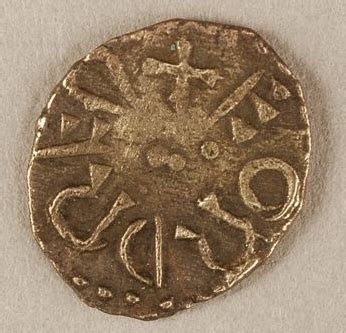
wergild was originally
payment made in gold coin
We were delighted that, without prior notice, a visitor from Oxford Unitarians joined us for this gathering.  And although, as it turns out, there were no children with us, should any have come, they would have been invited to show us their colouring-in of pictures of Ganesha in all his elephant-headed and pot-bellied glory.


As a last point, as nearby in Bournemouth this weekend was the gay pride celebration "Bourne Free", we decked the entrance to the Meeting House in the rainbow flag of Pride.


07 June 2019

Abiding messages from a period of lectio divina focused on life, death and neighbours

I have just completed over two years reading the words written by Rowan Williams in Silence and Honey Cakes, using the ancient discipline known as lectio divina – ‘Divine Reading’.

What is lectio divina?

What we read is divine – we encounter a passage of scripture to see in it God’s word for us – and

How we read is divine – we read prayerfully, moved by Spirit – we let the text come to us, un-queried, unedited – seeking  to be addressed by what we read, and to respond to that interrogation.

There are four movements to lectio divina:
  • We  read – slowly and unedited
  • We meditate – we enter deeply into the meaning of the text
  • We pray – we respond to God in the light of this meaning
  • We contemplate – we simply rest in the presence of God without further words

Looking back over this long exercise, these rather random and not very coherent snippets (slightly adapted in places) will be the abiding messages for me:

“…. a person who is wholly self-consistent, whose identity is completely bound up with the calling to live in God…..”

“…..because of our baptism into life, we are bound to the patient, long-term discovery of what grace, life, will do with us…..”

“Do not take short cuts around the processes of real personal exchange.”

“Intimacy with God is both the fruit and the course of living together.”

“The goal is reconciliation with God by way of truth and mercy.”

“At the moment when we reveal a sibling’s fault, God reveals our own.”

“Withdraw from everything that helps imprison the neighbour.”

“The problem of myself will not just go away or solve itself or get solved by a new environment.”

“….. the temptation to think that going somewhere else will make things easier….”

“Becoming vulnerable before God is the heart of transformation, which we are by no means sure we want, if that is what it costs.”


“Without silence we shan’t get any closer to knowing who we are before God.”


18 April 2017

April 2017 meeting for reverence – recognising and staying with suffering, showing respect to others Ringwood #unitarians

Our meeting for reverence this month was held on 9th April, celebrated by western Christians as Palm Sunday.  That’s the day when it is remembered that Jesus of Nazareth was celebrated and welcomed as potentially the leader of a new order as he arrived in Jerusalem, prior to the most important feast of the Jewish year, the Passover.  In Judea at the time many were asking questions over the just exercise of power, and the right to self-determination.  Questions which should not go away and which must continue to be asked, as lessons from even recent history are gradually forgotten.  It was thought that Jesus was going to confront ruling interests with these questions.


Over a number of our gatherings recently we have been expressing our concern and dismay at the turmoil caused by dissension, division, disagreement, conflict and war all around the globe at the moment.  And that is on top of what could be thought of as the ordinary sadnesses, chaos and upsets experienced in domestic and family settings.


It would be possible to feel, and act, as if powerless under these circumstances.  Rather, in this meeting, we exercised our option to face it, square on.

We reflected on staying in the discomfort of recognising suffering, showing respect to others by acknowledging it.  Unusually for us, both our readings came from the Christian heritage; specifically, the Gospel of Mark.  The first was the section on the triumphant entry into Jerusalem, and the the second was on the subsequent agony in the garden of Gethsemane. 

"The key to meditation is learning to stay."


After our period of silent meditation, a practice which figures in many world faith traditions, we sang hymns of peaceful resistance (“Kum-ba-yah,” and “We will overcome, some day”). 


17 March 2016

March 2016 meeting for reverence


On Sunday our meeting for reverence was led by a visitor – the Unitarian District Minister for London and the South East of England, Rev Martin Whitell.  Martin had already conducted two Unitarian weddings at the Ringwood Meeting House but this was the first time he had come to lead our regular meeting for reverence.

He took as his theme “The Sounds of Silence.”

Our gathering followed our usual format, starting with a simple ritual.  Our silent ritual can be interpreted in a variety of ways, since we each place meaning on it privately.  For instance, one interpretation might be that it honours the four fundamental elements fire, earth, water, air.  Another interpretation might see the same ritual as reminding us of “light of spirit or soul connecting us”, “bread of life given for us”, “water of life moving through us”, “breath of life inspiring us”.  But there are as many different meanings as there are people taking part, because as Unitarians we do not impose doctrine (religious theory or explanations) on anyone.

Included in the meeting were a mixture of readings, silence and music, both for listening to and for joining in with.  There was “Songs without Words” (Op 38 no 6) by Felix Mendelssohn.  There was also a piece performed by the Dunblane Cathedral handbell ringers.  Two hymns from the most recent Unitarian hymnbook were sung and then Martin reflected on the role of quietness in our finding our way in life.  The Simon and Garfunkel song “Sounds of Silence” gave more food for thought.  The texts of the hymns and readings explored the religious experience of realising in quiet times things that are not easy to put into words but that underpin life choices and changes.

Also as usual, we lit candles as we shared our current joys and concerns.  This part of the meeting sometimes has many words out loud, and sometimes almost none at all.  Yet it is always one of the most moving parts of our time together.

These are some of the words that were used during our meeting:


We listen too much to the telephone and we listen too little to nature.  The wind is one of my sounds.  A lonely sound, perhaps, but soothing….
As a matter of fact, one of the greatest sounds of them all — and to me it is a sound — is utter, complete silence. 

André Kostelanetz (1901–1980) Russian conductor


And the people bowed and prayed
To the neon god they made
And the sign flashed out its warning
In the words that it was forming
And the sign said “The words of the prophets
Are written on subway walls
And tenement halls
And whispered in the sounds of silence.”
© 1964 Words by Paul Simon


True silence is the rest of the mind;
it is to the spirit what sleep is to the body – nourishment and refreshment. 

William Penn (1644–1718)


You can hear the footsteps of God
when silence reigns in the mind. 

Sri Sathya Sai Baba (1926–2011)
Indian guru and philanthropist


Let us be silent,
that we may hear the whispers of the gods.

Ralph Waldo Emerson (1803–1882) Transcendentalist